
Industry News & Updates

Apparel Manufacturing Insights & Blog

Discover fashion trends, garment sourcing tips, and sustainable manufacturing practices from Posh Garments Ltd.

Sustainable Fashion

Quality, Compliance & Sourcing Guides

Ethical manufacturing insights — from organic fabric selection to global logistics.

Global Export Leaders

Women's, Men's & Kids' Garments

Expert articles on garment production, OEM/ODM apparel manufacturing, and export trends.

0%

Choosing a reliable supplier requires more than comparing catalog photos and low prices. This guide explores 10 Best Men's Sleepwear Wholesale Suppliers 2026 for retailers, online sellers, and private-label brands seeking dependable production partners. Men's Sleepwear Wholesale involves several practical decisions, including fabric comfort, sizing accuracy, minimum order quantities, and delivery consistency.

The suppliers featured in this guide are assessed through clear business criteria. These include cotton and modal quality, stitching strength, seasonal collections, customization options, sample availability, and communication standards. We also consider wholesale pricing, production capacity, packaging details, and support for repeat orders. A soft pajama set may look attractive on a screen, yet the waistband, seam finish, and colorfastness decide whether customers return.

Small details matter.

Where possible, buyers should request samples before placing larger orders. A supplier’s product page cannot reveal every weakness. One sample may show uneven stitching or fabric that feels thinner than expected. That does not always mean the supplier is unsuitable, but it deserves careful discussion. Our selection is practical rather than absolute, because supplier performance can change with materials, seasons, and order volumes. Readers should still verify current prices, certifications, lead times, and applicable trade requirements directly. This approach supports informed purchasing and helps businesses build more reliable sleepwear collections for 2026.
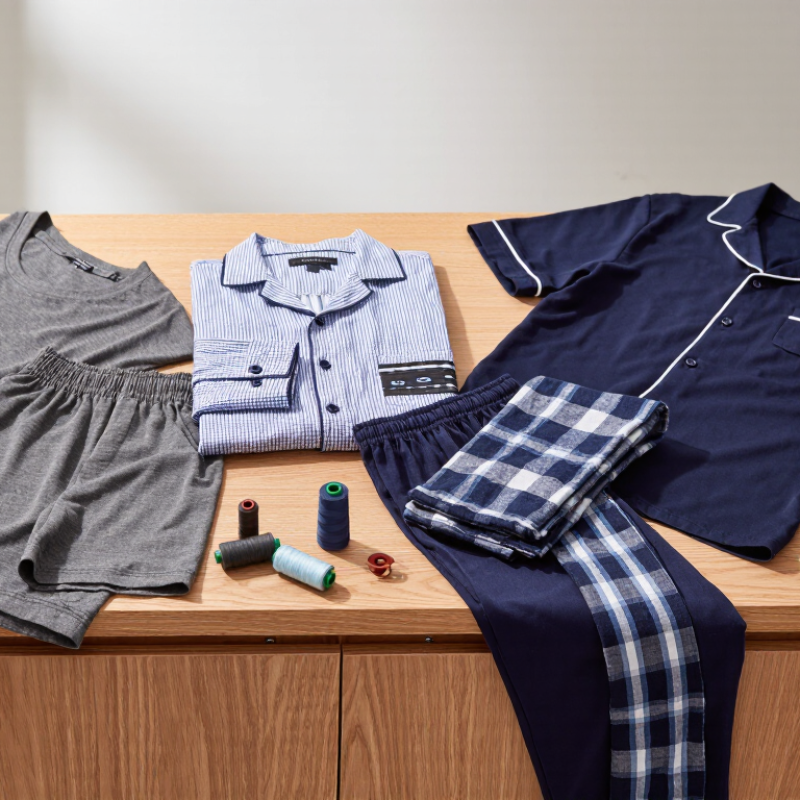
10 Best Men's Sleepwear Wholesale Suppliers 2026?

What to Look for in a Men’s Sleepwear Wholesale Supplier

Choosing a men’s sleepwear wholesale supplier requires more than comparing prices. Fabric quality should come first. Cotton, modal, and blended fabrics should feel soft, breathe well, and remain comfortable after repeated washing. Ask for fabric samples before placing a large order. A small sample can reveal loose stitching, uneven sizing, or color fading.

Reliable suppliers should provide clear size charts, production timelines, minimum order quantities, and inspection procedures. Their communication matters too. Slow replies may create problems when stock needs to be replenished quickly. Request product photos, measurement details, and packaging information. Check whether the supplier can maintain consistent quality across different production batches. This is often harder than expected.

Tips: Test sleepwear after washing. Compare shrinkage. Examine waistbands and seams. Confirm return or replacement terms in writing. Ask about fabric composition and care labels. Keep records of approvals and shipment details. A supplier may offer an attractive first order, yet later batches can feel different. That possibility deserves attention. Do not rely on promises alone; verify performance through samples, inspections, and small trial orders.

10 Best Men's Sleepwear Wholesale Suppliers 2026: What to Look for in a Men's Sleepwear Wholesale Supplier

This practical sourcing benchmark shows how wholesale buyers can prioritize key supplier-selection factors. Product quality, reliable fulfillment, pricing, compliance, customization, and minimum order quantities are among the most important considerations when evaluating men's sleepwear suppliers.

Top 10 Men’s Sleepwear Wholesale Suppliers for 2026

The top 10 men’s sleepwear wholesale suppliers for 2026 should be judged by production control, not glossy catalogues. Current market estimates from Grand View Research show continued growth in sleepwear demand, driven by comfort, remote work, and premium home clothing. The strongest suppliers offer cotton pajama sets, modal lounge trousers, bamboo-blend tops, flannel winterwear, and extended sizing. Small details matter. Check seam density, waistband recovery, fabric shrinkage, and colorfastness before placing a large order.

A practical top-ten shortlist includes suppliers specializing in private-label production, low minimum orders, organic cotton, recycled fibers, plus-size patterns, fast sampling, seasonal flannel, lightweight summer sets, hotel-grade sleepwear, and export documentation. Textile Exchange reports that recycled and preferred fibers are gaining attention, but sustainability claims still require evidence. Request fiber certificates, factory audit records, test reports, and packaging details. Do not rely on a supplier’s website alone. Ask for a physical sample.

Price remains important, yet the cheapest quote can hide weak stitching or inconsistent sizing. Statista’s apparel data indicates that online clothing sales continue expanding, increasing pressure on wholesalers to deliver accurate product information and dependable replenishment. No ranking is perfect. A supplier may perform well on modal fabric but struggle with flannel consistency. I would test three production batches, record wash results, and compare actual measurements with the specification sheet. That extra work feels slow. It can prevent expensive returns.

10 Best Men's Sleepwear Wholesale Suppliers 2026? - Top 10 Men’s Sleepwear Wholesale Suppliers for 2026

Rank Supplier Profile Best Suited For Typical MOQ Range Common Product Options Customization Capacity Typical Sample Lead Time Typical Bulk Lead Time Key Buying Consideration
1 Direct OEM Sleepwear Manufacturer Established private-label businesses 300–1,000 pieces per style Pyjama sets, robes, lounge trousers, sleep shirts High: fabric, color, labels, packaging and sizing 7–14 days 30–60 days Usually offers the strongest unit-cost potential at larger volumes.
2 Low-MOQ Private-Label Factory Start-ups and small online retailers 50–300 pieces per style Basic cotton sets, shorts, tops and seasonal sleepwear Medium to high: selected fabrics, labels and colors 7–15 days 25–45 days Lower order thresholds may come with higher per-unit pricing.
3 Stock-Ready Wholesale Distributor Fast replenishment and test orders 1–12 pieces per style or case-pack quantities Ready-made sets, robes, basic tops and bottoms Low: usually no design changes Not usually required 3–14 days, subject to stock Check available sizes, colors, inventory accuracy and carton quantities.
4 Sustainable Textile Manufacturer Eco-focused apparel collections 200–800 pieces per style Organic-cotton, recycled-fiber and low-impact-dye sleepwear High, subject to approved material availability 10–21 days 35–70 days Request valid material certifications and transaction-specific documentation.
5 Cut-and-Sew Custom Apparel Factory Original patterns and distinctive fits 300–1,000 pieces per style Tailored pyjamas, modal sets, woven styles and loungewear Very high: patterns, construction, trims and grading 10–21 days 40–75 days Best results depend on complete tech packs and approved fit samples.
6 Full-Service Apparel Trading Company Buyers needing multi-factory coordination 100–500 pieces per style Mixed sleepwear categories and coordinated collections Medium to high through partner factories 10–20 days 35–70 days Confirm factory location, quality-control responsibility and service fees.
7 Small-Batch Premium Manufacturer Higher-quality capsule collections 100–400 pieces per style Premium knits, silk blends, refined robes and elevated sets High, with fabric and workmanship restrictions 14–28 days 45–90 days Evaluate fabric performance, seam quality, shrinkage and color fastness.
8 Digital Wholesale Marketplace Supplier Product discovery and small trial orders Often 10–100 pieces per style Trend-led sets, seasonal styles and ready-to-ship basics Usually low; varies by individual seller Not usually required 7–30 days, depending on stock and origin Verify seller history, product samples, shipping terms and return policies.
9 Regional Domestic Wholesaler Retailers requiring shorter delivery routes 12–100 pieces per style Core pyjamas, seasonal robes and everyday lounge basics Low to medium Not usually required 2–14 days, subject to inventory Higher purchase prices may be offset by simpler logistics and faster delivery.
10 Made-to-Order Flexible Production Studio Limited releases and demand-controlled inventory 30–200 pieces per style Small-run sets, personalized labels and limited colorways High, within a restricted material and capacity range 14–28 days 35–80 days Suitable for reducing excess stock, but production capacity may be limited.

Benchmark note: MOQ and lead-time figures are typical industry ranges for men's sleepwear and can vary by fabric availability, order complexity, season, destination, inspection requirements and shipping method. Always confirm current terms with the supplier before placing an order.

Product Range, Fabric Quality, and Sizing Options Compared

For 2026, men’s sleepwear wholesalers should offer more than basic cotton pajamas. Grand View Research projects the global sleepwear market to grow at roughly 9% annually through 2030, increasing demand for seasonal and purpose-built collections. Strong product ranges include pajama sets, lounge trousers, robes, thermal layers, and lightweight summer shorts. Suppliers with twelve-month coverage reduce stock gaps. That matters for retailers.

Fabric quality needs closer inspection. Textile Exchange’s Materials Market Report 2024 places cotton at about one-fifth of global fiber production, yet fiber percentages do not guarantee comfort. Buyers should request fabric weight, shrinkage results, colorfastness records, and wash-test samples. Combed cotton feels smoother, while cotton-modal blends often improve drape and softness. Polyester fleece remains practical for winter, but poor ventilation can disappoint customers. Feel the sample after washing.

Sizing is less simple than adding larger labels. Reliable suppliers should provide chest, waist, hip, inseam, and garment measurements in centimeters and inches. Their grading rules should remain consistent across styles. ISO 8559-1 offers a useful reference for body measurement terminology, but it cannot replace real fit testing. Ask for regular, relaxed, and extended sizes where demand supports them. Size charts can still mislead. I would test at least three body shapes before placing a large order, because one overlooked fit issue can affect returns, reviews, and repeat sales.

Pricing, Minimum Orders, and Customization Services

For the 10 best men’s sleepwear wholesale suppliers in 2026, pricing must be judged beyond the first quote.

Typical wholesale prices range from $6 to $18 per pajama set, depending on fabric, stitching, packaging, and order volume. Cotton blends usually cost less than modal, bamboo, or premium organic cotton.

Grand View Research projects the global sleepwear market to grow at roughly 5% annually through 2030. That growth may support higher-quality sourcing, but it will not remove negotiation pressure.

Ask for a landed-cost estimate. Freight, sampling, labeling, and import handling can change the real margin.

Minimum order quantities often start near 50 sets for ready-made designs. Custom colors, woven labels, and printed packaging may require 100 to 500 sets. Some factories offer lower MOQs with higher unit prices. That trade-off is useful for testing demand.

Customization should include size grading, fabric weight, waistband construction, care labels, and packaging dimensions. Request a pre-production sample. Small details matter.

The wrong inseam can create expensive returns. The National Retail Federation and Appriss estimated that 16.9% of U.S. retail sales were returned in 2024, showing why fit checks deserve serious attention.

A supplier with transparent samples, inspection records, and written lead times is safer than the cheapest quotation. I would still question every forecast.

Wholesale pricing changes quickly when cotton, labor, or freight costs shift.

How to Choose the Right Supplier for Your Business

Choosing among the 10 best men’s sleepwear wholesale suppliers for 2026 requires more than comparing prices. McKinsey’s State of Fashion 2025 expects low single-digit industry growth, making inventory discipline increasingly important. Ask each supplier for fabric composition, size measurements, minimum order quantities, and production lead times. Request physical samples. A soft catalog image proves very little. Check stitching around the waistband, button strength, shrinkage after washing, and color consistency under store lighting. Keep one tested sample beside every bulk shipment.

Sustainability also needs measurable evidence. Textile Exchange’s Materials Market Report 2024 recorded global fiber production at 132 million metric tonnes in 2023, showing why material choices deserve scrutiny. Prefer suppliers who provide traceable fiber information, factory details, and recent quality records. Do not accept vague claims such as “eco-friendly” without documentation. Review payment terms, defect allowances, packaging requirements, and communication speed before signing. A supplier with the lowest quote may create expensive returns. My own checklist would still miss something; real wear testing can reveal uncomfortable seams or weak elastic. Leave room for a small trial order before committing to seasonal volume.

FAQS

What fabric qualities matter most in men’s sleepwear?

Choose fabric that feels soft, breathes well, and stays comfortable after repeated washing. Cotton, modal, and blended fabrics are common options. Touch samples before ordering.

Why should wholesalers request physical samples?

Samples can reveal loose stitching, uneven sizing, color fading, and uncomfortable waistbands. A catalogue may look perfect. Reality can differ.

What supplier information should buyers confirm?

Ask for size charts, production timelines, minimum order quantities, inspection procedures, and packaging details. Request everything in writing.

How can buyers test sleepwear quality?

Wash the sample according to its care label. Measure shrinkage afterward. Check seams, waistband recovery, colorfastness, and fabric softness.

Why is production consistency important?

Later batches may feel different from the first order. Compare measurements, fabric texture, and stitching across at least three batches.

What sustainability evidence should buyers request?

Ask for fiber certificates, factory audit records, test reports, and packaging details. Sustainability claims need proof. A promise is not enough.

How should buyers compare supplier prices?

Do not choose the lowest quote automatically. Cheap sleepwear may hide weak stitching, inaccurate sizing, or poor fabric performance.

What affects a supplier’s ability to support replenishment?

Fast communication, stable production, clear timelines, and consistent sizing support reliable restocking. Slow replies can create inventory gaps.

What return terms should wholesalers confirm?

Confirm return and replacement conditions before ordering. Keep approval records, measurement sheets, inspection notes, and shipment details.

Is any supplier ranking completely reliable?

No ranking is perfect. A supplier may handle modal fabric well but struggle with flannel consistency. Test carefully before scaling.

Conclusion

Choosing the right Men's Sleepwear Wholesale supplier is essential for retailers seeking consistent quality, competitive pricing, and reliable customer satisfaction in 2026. This guide explains the key factors to evaluate, including fabric softness, durability, breathability, size availability, product variety, and production consistency. It also compares ten leading supplier types based on their range of pajama sets, robes, loungewear, seasonal designs, and adaptable sizing options.

The article further examines pricing structures, minimum order quantities, sample policies, private-label possibilities, packaging support, and customization services. Whether you operate an online store, department shop, or specialty apparel business, understanding these details can help reduce purchasing risks and improve profit margins. By comparing supplier capabilities with your target market, budget, expected order volume, and brand requirements, you can select a dependable partner that supports long-term growth and delivers comfortable, well-made men’s sleepwear.

Ethan

Ethan

Ethan is a dedicated marketing professional with extensive knowledge of the company’s products, solutions, and customer-focused approach. As a regular contributor to the company website, he creates informative blog articles that explain complex product features, industry developments, and practical......