
Apparel Manufacturing Insights & Blog
Discover fashion trends, garment sourcing tips, and sustainable manufacturing practices from Posh Garments Ltd.
Quality, Compliance & Sourcing Guides
Ethical manufacturing insights — from organic fabric selection to global logistics.
Women's, Men's & Kids' Garments
Expert articles on garment production, OEM/ODM apparel manufacturing, and export trends.
2026 Best Women's Loungewear Manufacturers?
Table of Contents
- How to Define the Best Women's Loungewear Manufacturer in 2026
- Key Criteria for Comparing Women's Loungewear Manufacturers
- Top Manufacturer Types and Their Production Capabilities
- How to Assess Quality, Compliance, and Sustainability
- How to Choose the Right Manufacturing Partner for Your Brand
- FAQS
- Conclusion
- Related Posts
Choosing the right partner for Women's Loungewear Manufacturing requires more than comparing catalog photos. In 2026, buyers need factories that balance comfort, consistency, traceability, and responsible production. A soft pajama set may look simple, yet its success depends on fabric recovery, seam strength, shrinkage control, and accurate sizing. Small details matter.
This guide examines leading women's loungewear manufacturers through practical sourcing criteria. We consider fabric options, sampling procedures, minimum order quantities, production capacity, customization, quality inspections, and communication standards. We also review how manufacturers document material origins and workplace practices. Public certifications can help, but they should be verified rather than accepted as proof alone. Ask for current documents.
The strongest suppliers usually explain their process clearly. They can show sample development, fit testing, color approval, and final inspection records. They should also respond honestly when a fabric, deadline, or design creates difficulty. That honesty is valuable. No manufacturer is perfect, and even an experienced supplier may miss a shade difference or underestimate seasonal demand. A careful buyer should therefore request pre-production samples and define measurable quality standards before placing a larger order.
This overview is designed for fashion brands, retailers, and private-label buyers seeking dependable production partners. It does not treat low pricing as the only advantage. Instead, it weighs long-term value, product comfort, delivery reliability, and evidence-based factory performance. The final choice still requires direct verification, because supplier capabilities can change over time.
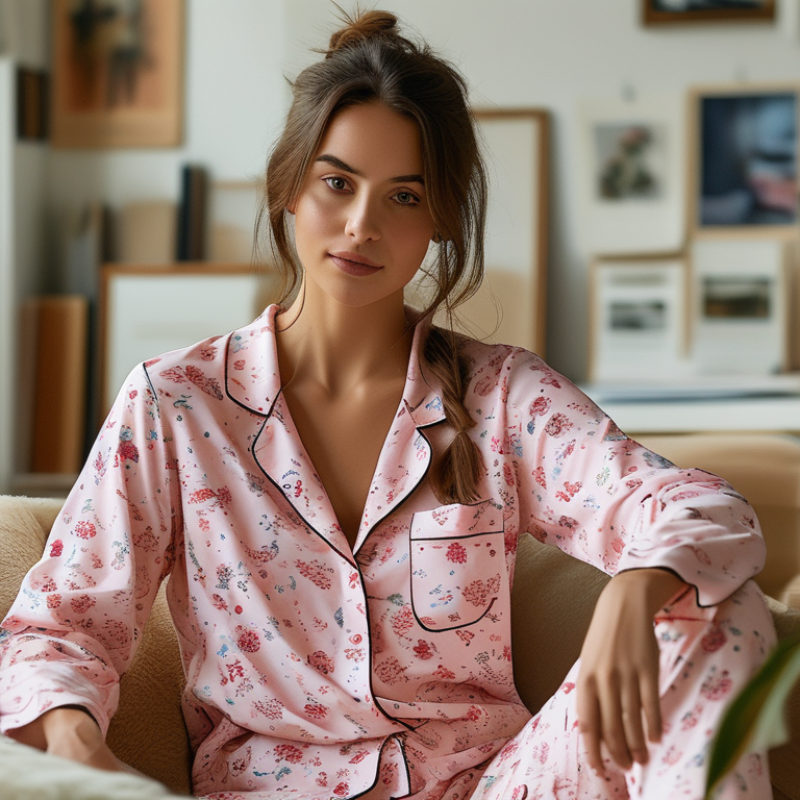
How to Define the Best Women's Loungewear Manufacturer in 2026
The best women’s loungewear manufacturer is not simply the cheapest supplier. It should combine fabric expertise, stable production, transparent sourcing, and dependable communication. Grand View Research estimates that the global loungewear market will expand strongly through 2030, increasing pressure on suppliers to deliver comfort and consistency. In practice, request fabric test reports, size samples, shrinkage results, and washing records before placing a large order. Softness matters. Recovery matters more.
Material choices now require closer review. Textile Exchange’s Materials Market Report 2024 recorded global fiber production at 124 million tonnes in 2023, with polyester representing about 57%. A qualified manufacturer should explain fiber content, recycled inputs, dyeing controls, and traceability without vague claims. Social compliance, workplace safety, and third-party audits also deserve verification. Certificates alone are not enough. I have seen attractive samples fail after repeated washing, so a realistic wear test remains essential.
Tips: Compare three suppliers using the same tech pack. Check minimum order quantities, lead times, quality-control stages, and defect policies. Ask for production photos and a corrective-action process. Confirm whether the factory can handle modal, cotton blends, rib knits, and elastic waistbands. Small details reveal capability. Do not ignore slow replies; communication problems often become shipment problems. However, perfect performance is unrealistic, and even strong factories need clear specifications, feedback, and reasonable timelines.
Key Criteria for Comparing Women's Loungewear Manufacturers
2026 Best Women's Loungewear Manufacturers?
Key Criteria for Comparing Women's Loungewear Manufacturers
Choosing a loungewear manufacturer requires more than reviewing attractive product photos. Fabric performance should come first. Check fiber content, fabric weight, stretch recovery, pilling resistance, and shrinkage after washing. A soft cotton blend may feel excellent initially, yet lose shape after several laundry cycles. Ask for test samples and wash them yourself. That small step often reveals uneven dyeing, twisted seams, or weak elastic.
Production experience also matters. Review the factory’s history with women’s sizing, relaxed silhouettes, and sensitive fabrics. Request clear information about minimum order quantities, sample fees, production timelines, and quality inspections. Reliable manufacturers explain these details without vague promises. Their cutting rooms should show consistent measurements across several pieces. Look closely at waistband stitching, pocket alignment, and seam finishing. Small flaws become expensive at scale.
Ethical and operational standards deserve equal attention. Evaluate workplace documentation, material traceability, waste controls, and written quality procedures. Independent certifications can support credibility, but certificates should be current and verifiable. Communication is another practical test. Does the team answer technical questions accurately? Does it report delays early? Not always. A polished sample can hide weak production control. I once trusted a perfect prototype too quickly; the bulk fabric felt rougher and arrived later than expected. Build comparison sheets, inspect pre-production samples, and leave room for honest uncertainty.
Top Manufacturer Types and Their Production Capabilities
2026 Best Women's Loungewear Manufacturers?
How to Assess Quality, Compliance, and Sustainability
2026 Best Women's Loungewear Manufacturers?
Quality begins with measurable details, not attractive samples. Check fabric weight, fiber content, colorfastness, shrinkage, and pilling after repeated washing. A soft first touch can mislead. In practical sourcing, I request production samples and compare them with approved standards. Examine waistband recovery, seam strength, pocket alignment, and zipper performance. Ask for laboratory reports from competent, independent facilities. Factory experience matters, but documented testing is more reliable than confident promises.
Compliance should cover worker safety, fair employment practices, chemical controls, and product labeling. Request current audit records, corrective-action plans, and traceability documents. Do not accept certificates without checking their scope and expiration date. Sustainability requires evidence across the supply chain. Review recycled-material claims, wastewater controls, energy use, packaging choices, and fabric origins. A factory may offer recycled fibers yet provide weak traceability. That gap deserves direct questions. No assessment is perfect, and I have sometimes relied too heavily on polished documents.
Tips: Ask for a small pilot order before scaling. Test garments after three wash cycles. Visit the facility when possible, or arrange a live video inspection. Compare actual material usage with the purchase order. Require clear records for every key fabric. Also, discuss improvement targets, not only current performance. A manufacturer willing to disclose weaknesses may be more dependable than one claiming flawless sustainability. Look closely. Details expose consistency.
2026 Best Women's Loungewear Manufacturers? - How to Assess Quality, Compliance, and Sustainability
A practical, evidence-based comparison framework for evaluating women's loungewear manufacturing partners without relying on brand-specific data.
| Assessment Dimension | Key Quality or ESG Indicator | Minimum Acceptable Benchmark | Preferred 2026 Benchmark | Verification Evidence | Weight |
|---|---|---|---|---|---|
| Fabric Quality | Fiber composition, fabric weight, dimensional stability, pilling resistance, and colorfastness | Approved lab report for each production fabric; test methods and tolerances documented | Consistent bulk results within agreed tolerances, including shrinkage, pilling, abrasion, and colorfastness testing | Third-party laboratory reports, fabric specifications, approved swatches, and bulk inspection records | 15% |
| Garment Construction | Seam strength, stitch density, seam allowance, elastic recovery, and finishing quality | Pre-production sample approved against a written technical package | Documented critical-to-quality points, in-line inspections, and final inspection based on an agreed AQL plan | Tech pack, construction checklist, inspection reports, and corrective-action records | 12% |
| Fit and Comfort | Size grading, pattern accuracy, stretch recovery, hand feel, and wearer comfort | Fit sample reviewed on the intended size range before bulk production | Wear testing across the size range with documented fit corrections and wash-wear validation | Measurement spec, graded patterns, fit comments, wear-test results, and wash-test records | 10% |
| Quality Management | Process control, traceability, complaint handling, and corrective-action effectiveness | Documented quality procedures and a named quality manager | ISO 9001-certified quality management system or equivalent independently audited system | Current certificate or audit report, quality manual, KPI records, and CAPA logs | 10% |
| Chemical Safety | Restricted substances control for dyes, finishes, prints, elastics, and packaging | Written restricted substances list aligned with applicable market requirements | Routine chemical testing by an accredited laboratory and verified chemical inventory management | RSL, laboratory test reports, safety data sheets, chemical inventory, and supplier declarations | 10% |
| Product Safety | Drawstrings, small parts, sharp points, flammability, labeling, and packaging safety | Design risk assessment completed before production | Market-specific compliance testing completed for every relevant product category and destination | Risk assessment, compliance test reports, care labels, fiber labels, and packaging approvals | 8% |
| Labor and Human Rights | Working hours, wages, freedom of association, grievance channels, and forced-labor controls | Signed supplier code of conduct and documented legal compliance process | Valid independent social audit with no unresolved critical findings; SA8000 or equivalent is an advantage | Social audit report, payroll samples, time records, worker interviews, and remediation plan | 10% |
| Environmental Management | Energy, water, wastewater, waste, emissions, and environmental legal compliance | Environmental policy and records for major environmental permits | ISO 14001-certified environmental management system or equivalent independently audited system | Certificate or audit report, utility data, wastewater tests, permits, and waste-transfer records | 8% |
| Material Sustainability | Use of organic, recycled, or lower-impact fibers with chain-of-custody controls | Material claims supported by transaction records and supplier documentation | Relevant scope certificates and transaction certificates; GOTS requires at least 70% certified organic fibers for products labeled as organic | Scope certificate, transaction certificate, fiber declarations, purchase records, and mass-balance documentation | 7% |
| Traceability | Ability to trace fibers, yarns, fabrics, trims, production sites, and subcontractors | Traceability available from finished goods to primary production records | Digital lot-level traceability with disclosed processing sites and documented subcontractor approval | Production map, lot records, purchase orders, supplier list, and subcontractor audit records | 5% |
| Manufacturing Capability | Monthly capacity, minimum order quantity, sampling speed, equipment, and product specialization | Capacity and lead time confirmed in writing for the proposed order plan | Flexible small-batch capability, stable production planning, and demonstrated experience with stretch or soft-knit garments | Capacity plan, production schedule, equipment list, sample history, and references from comparable projects | 3% |
| Transparency and Reporting | Accuracy, timeliness, and completeness of quality and sustainability disclosures | Supplier provides requested certificates and corrective-action updates | Quarterly KPI reporting covering defects, on-time delivery, energy, water, waste, and social findings | Quarterly dashboard, audit history, KPI definitions, and independently verifiable records | 2% |
How to Choose the Right Manufacturing Partner for Your Brand
Choosing a women’s loungewear manufacturer in 2026 requires more than comparing unit prices. Your partner must understand softness, stretch recovery, fit consistency, and everyday durability. Request a development sample, a graded size set, and a fabric test report. Check whether the waistband twists after washing and whether seams irritate skin. Small details expose real production skill.
Ask for clear minimum order quantities, sampling fees, production capacity, and realistic lead times. A reliable factory explains delays before they become expensive problems. Review quality-control checkpoints, from fabric inspection to final carton checks. Confirm ethical labor practices, traceable materials, and compliance documentation for your target markets. Do not accept vague promises. Video calls help, but physical audits or independent inspections provide stronger evidence.
The best partner communicates like a product team, not a sales desk. They should question unclear tech packs and suggest practical improvements without changing the design secretly. Discuss colorfastness, shrinkage tolerance, packaging, labeling, and reorder support before signing. A low minimum order may help a young label, but inconsistent replenishment can damage customer trust. I would also test one smaller production run before committing to large volumes. This adds cost. It may reveal problems that a beautiful sample conceals.
FAQS
: Check fiber content, fabric weight, stretch recovery, pilling resistance, colorfastness, and shrinkage. Softness can disappear after several washes. Test it yourself.
Production samples reveal uneven dyeing, twisted seams, weak elastic, and rougher fabric. A polished prototype proves little.
Wash samples at least three times, following the planned care instructions. Measure shrinkage and inspect shape recovery afterward. Small changes matter.
Examine waistband stitching, pocket alignment, seam strength, zipper performance, and finishing quality. Loose threads often signal weak control.
Request minimum order quantities, sample fees, production timelines, inspection methods, and delay procedures. Vague answers deserve caution.
Review experience with women’s sizing, relaxed silhouettes, and sensitive fabrics. Compare measurements across several finished pieces.
Ask for current audit records, worker-safety documents, chemical controls, labeling details, and corrective-action plans. Check dates and coverage.
Request traceability for fibers, wastewater records, energy information, packaging details, and material-origin documents. Recycled content alone proves little.
Yes. A pilot order exposes production variation before larger commitments. Compare delivered materials with the purchase order.
Reliable teams answer technical questions clearly and report delays early. This is not guaranteed. Keep comparing evidence.
Conclusion
Choosing the best women’s loungewear manufacturer in 2026 requires more than comparing prices. The right partner should combine reliable production capacity, flexible minimum order quantities, modern design support, consistent sizing, premium fabric options, and dependable delivery timelines. Key evaluation criteria include technical expertise, communication, sampling processes, quality control systems, and the ability to scale production as a brand grows. Different manufacturer types may specialize in small-batch development, large-volume production, private labeling, or sustainable custom manufacturing, so their capabilities should match the project’s requirements.
A strong partner in Women’s Loungewear Manufacturing should also demonstrate transparent compliance practices, responsible labor standards, material traceability, and practical sustainability measures. Brands should assess fabric durability, stitching quality, color consistency, packaging, certifications, and inspection procedures before placing substantial orders. Ultimately, the best manufacturing relationship is built on clear specifications, realistic costs, mutual accountability, and long-term cooperation. Comparing potential suppliers through samples, audits, references, and detailed production agreements can help ensure dependable quality and create comfortable, market-ready loungewear collections.

Blog Tags: