
Industry News & Updates

Apparel Manufacturing Insights & Blog

Discover fashion trends, garment sourcing tips, and sustainable manufacturing practices from Posh Garments Ltd.

Sustainable Fashion

Quality, Compliance & Sourcing Guides

Ethical manufacturing insights — from organic fabric selection to global logistics.

Global Export Leaders

Women's, Men's & Kids' Garments

Expert articles on garment production, OEM/ODM apparel manufacturing, and export trends.

0%

Choosing a reliable supplier is the foundation of successful Women's Nightwear Manufacturing. The right partner protects comfort, consistency, and customer trust. A soft pajama set may look attractive online, yet hidden flaws can appear after one wash. Seams may twist. Elastic may lose recovery. Fabric may feel warm in the showroom but uncomfortable during sleep.

Fashion designer Donna Karan once said, “Comfort is not a luxury; it is a necessity.” Her words explain why nightwear requires more than attractive styling. Buyers should examine fabric composition, GSM, shrinkage results, colorfastness, and seam strength. They should also request size-set samples, production photographs, and independent quality reports. A dependable manufacturer answers clearly and provides traceable information.

Look closely at the factory’s process. Can its team control cutting accuracy across hundreds of pieces? Does it inspect fabric before sewing? Are needle marks, loose threads, and uneven hems recorded during final checks? These small details matter. They reach the customer’s skin.

Certifications can support credibility, but certificates alone cannot prove daily performance. A supplier may present polished documents while offering inconsistent samples. That possibility deserves attention. An on-site audit, video inspection, or trial order can reveal more than a persuasive sales presentation.

Cost still matters. However, the lowest quotation may hide weak fabric, rushed stitching, or poor communication. A reliable partner explains minimum order quantities, lead times, packaging, and corrective actions before production begins. No manufacturer is perfect. Even experienced teams make mistakes. The important question is whether they identify problems early, respond honestly, and improve the next batch.
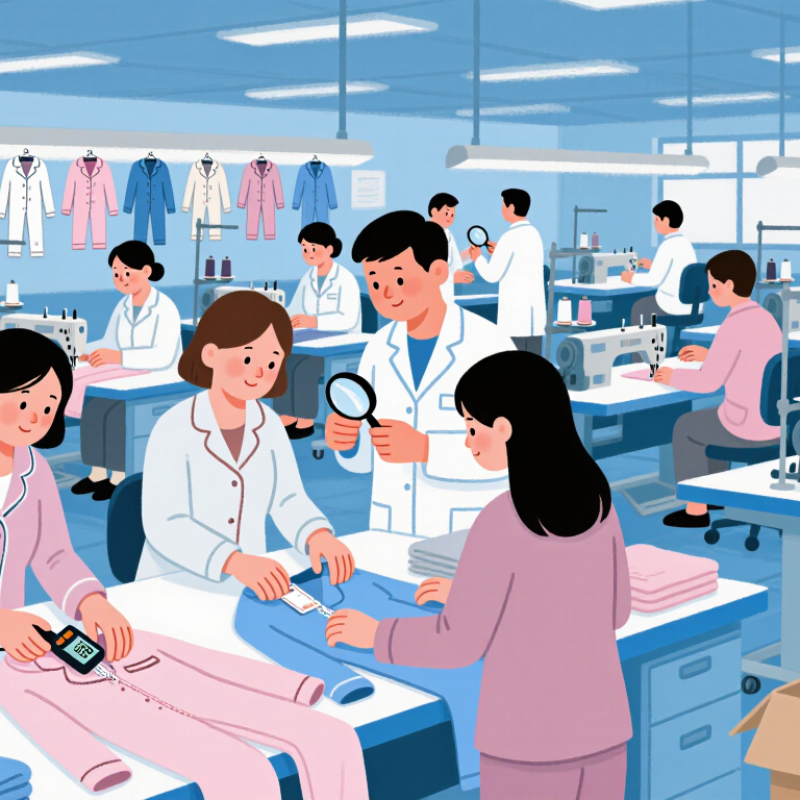
How to Choose a Reliable Womens Nightwear Manufacturer

Define Product Needs Using the 20–30% Online Apparel Return-Rate Benchmark

Choosing a Reliable Womens Nightwear Manufacturer

A 20–30% online apparel return rate is a useful planning benchmark, not a fixed rule. It often signals fit confusion, fabric expectations, or unclear product information. I use it as a risk allowance when defining a nightwear range. Returns can quickly damage margins. They also reveal what customers misunderstood before purchasing.

Describe each product with measurable details. Include bust, waist, hip, inseam, and garment length measurements. Specify fabric weight, stretch level, softness, opacity, and washing behavior. A supplier should turn these needs into a clear technical sheet.

Request samples in several sizes, then test them after washing. Check seam strength, waistband recovery, button security, and color stability. Small flaws become expensive when repeated across hundreds of pieces.

Reliable manufacturers welcome detailed feedback and provide documented quality checks. Ask how they inspect measurements, fabric lots, stitching, labels, and packing. Review their sampling discipline, communication speed, and ability to correct defects.

I once underestimated shrinkage because the first sample looked perfect. That mistake taught me to test real care conditions, not showroom appearance. Product photos should also match the delivered color and fit. A return benchmark cannot explain every problem. Customer comments and return reasons still deserve careful review.

Screen Suppliers by MOQ, Monthly Capacity, Lead Time, and 2025 Demand Data

Choosing a reliable women’s nightwear manufacturer requires more than comparing sample photos. In my sourcing work, I start with MOQ because a low unit price can hide excessive inventory. Ask whether the MOQ applies per color, size, or style. A 500-piece requirement sounds manageable, but five colors can create 2,500 units. Request recent production records, not promises. Monthly capacity should match your launch plan, while leaving room for quality checks and repeat orders. Capacity claims need evidence.

Lead time must be separated into fabric booking, sampling, production, and final inspection. A 35-day production window may become 55 days when trims arrive late. Ask suppliers to share a written timeline and define delay alerts.

Compare this with 2025 demand data, including seasonal peaks, sleepwear search trends, and your sales history. Forecasts are useful, but not perfect. I once trusted a broad market report and overestimated one pastel color. That mistake tied up cash. Use smaller test orders before scaling, and review sell-through weekly.

Tips: Request MOQ and capacity by style, color, and size range. Confirm lead times in writing. Check whether 2025 forecasts reflect your target market. Ask for inspection photos, measurement records, and references from comparable production volumes. Keep a contingency window. Real reliability appears when a supplier explains limits clearly, not when every answer sounds easy.

Verify Fabric Quality Through GSM, Shrinkage, Colorfastness, and Fiber Tests

How to Choose a Reliable Womens Nightwear Manufacturer

A reliable womens nightwear manufacturer should prove fabric quality with measurable evidence. During sampling, request the fabric’s GSM, or grams per square meter. GSM affects warmth, drape, durability, and comfort. A lightweight pajama may feel cool, but excessive thinness can cause early tearing. Compare the approved sample with bulk fabric, not only the specification sheet.

Shrinkage testing is equally important. Wash a sample using the intended care instructions, then measure it before and after washing. A two-centimeter change in trouser length can affect fit. Ask for colorfastness results after washing, rubbing, and perspiration exposure. Dark dyes deserve closer attention. Fiber tests can confirm whether cotton, modal, polyester, or blended fibers match the stated composition. Request dated laboratory reports and sample identification. Paperwork can still contain mistakes. I have seen minor fiber variations create noticeable differences in softness and pilling.

Tips: Keep sealed fabric swatches from every production batch. Record GSM, test dates, wash temperature, and measured shrinkage. If a manufacturer avoids independent testing, treat that as a warning. Do not rely on touch alone. Human judgment is useful, but it is not precise enough for consistent quality control. Ask questions, repeat tests, and allow small imperfections to guide better decisions.

Audit Production with ISO 9001 Controls and the AQL 2.5 Defect Standard

How to Choose a Reliable Womens Nightwear Manufacturer

Audit Production with ISO 9001 Controls and the AQL 2.5 Defect Standard

A reliable womens nightwear manufacturer should show more than attractive samples. Ask how its ISO 9001 system controls fabric inspection, cutting, sewing, and packing. Request recent audit records, corrective action reports, and production traceability documents. Small details matter.

During a factory visit, check fabric rolls under clear lighting. Review shade consistency, fabric weight, seam strength, elastic recovery, and label placement. Inspect several finished garments, not only the best samples. Experienced auditors also compare approved measurements with actual pieces from the production line.

AQL 2.5 should support a written sampling plan for acceptable quality levels. It does not mean that 2.5 percent of every shipment may contain defects. Confirm the sample size, defect categories, inspection level, and rejection rules before production starts. Critical defects require stricter control than minor loose threads. Photographs and signed inspection records improve accountability.

ISO 9001 is valuable, but certification alone cannot guarantee perfect nightwear. I have seen factories maintain excellent documents while missing uneven stitching during busy seasons. That weakness deserves honest discussion. Ask who investigates recurring defects and how quickly the factory changes its process. A dependable supplier welcomes reinspection, keeps clear records, and explains problems without hiding them.

How to Choose a Reliable Women's Nightwear Manufacturer

Use ISO 9001 controls to verify documented processes, traceability, corrective actions, and final inspection. The chart shows commonly used AQL reference levels for defect classification: critical defects require zero acceptance, while major and minor defects are assessed against their selected AQL values.

AQL is a sampling-plan parameter, not a guaranteed defect percentage. The final accept/reject decision depends on lot size, sample size, inspection level, and the applicable sampling table.

Confirm REACH, CPSIA, OEKO-TEX, Social Compliance, and Landed-Cost Evidence

How to Choose a Reliable Womens Nightwear Manufacturer

A reliable womens nightwear manufacturer should provide evidence, not polished promises. During factory reviews, I request current REACH declarations for fabrics, dyes, prints, and accessories. I check product composition, testing laboratories, document dates, and matching purchase records. A recycled-fiber claim without batch records is weak evidence. Small details matter.

CPSIA mainly applies to products for children, so confirm its relevance to your sales market. For adult nightwear, verify flammability, labeling, and chemical safety requirements. Request test reports showing the exact fabric, color, style, and production batch. OEKO-TEX documentation should include certificate scope, validity, and product class. Do not accept a logo image alone. Ask for social compliance audit dates, worker interview details, wage records, working-hour controls, fire exits, and subcontractor disclosure. A remote audit is not enough.

Landed-cost evidence deserves equal attention. Request an itemized quotation covering fabric, sewing, trims, packaging, testing, freight, insurance, duties, brokerage, and possible rework. Use the same order quantity and delivery terms when comparing factories. Check the Incoterm, destination port, carton dimensions, and currency assumptions. This is where errors hide. One overlooked accessory can change the final cost. I prefer written evidence, but my checklist is never perfect; sampling, retesting, and updated freight quotes can still expose gaps.

How to Choose a Reliable Womens Nightwear Manufacturer - Confirm REACH, CPSIA, OEKO-TEX, Social Compliance, and Landed-Cost Evidence

Anonymized procurement evidence matrix for comparing womens nightwear manufacturers. “Verified” means the specified evidence was reviewed for the stated product scope and date; “Partial” means additional documentation is required.

Anonymous Supplier ID REACH Evidence CPSIA Evidence OEKO-TEX Evidence Social Compliance Evidence Product Scope Reviewed Landed-Cost Evidence
(USD per unit)
Cost Assumptions Key Risk or Gap Overall Assessment
Manufacturer A Verified
SVHC declaration dated 14 Feb 2025; applies to shell fabric, lace, elastic, buttons, labels, and packaging components.
Verified
Third-party test reports dated 28 Jan 2025 covering lead in accessible components and phthalates in plasticized materials.
Verified
Valid certificate evidence reviewed for finished nightwear and the submitted fabric composition; certificate scope and validity period matched the quotation.
Verified
Four-pillar social audit dated 6 Nov 2024; two minor findings shown as closed with corrective-action evidence.
Viscose-blend pajama sets, satin trims, elastic waistbands, printed care labels, and retail polybags. FOB: $6.80
Freight: $0.42
Duty: $0.68
Broker: $0.12
Inspection: $0.09
Total: $8.11
1,000 units; ocean freight allocation; duty estimate based on the declared customs value and applicable tariff classification; standard pre-shipment inspection. Reconfirm chemical compliance when adding new prints, coatings, or metal accessories. Low evidence risk
Strong documentation package; suitable for final commercial negotiation subject to production-lot testing.
Manufacturer B Partial
General REACH declaration provided, but no current SVHC evidence for elastic, screen-print ink, or metal accessories.
Verified
Reports cover lead and phthalates for the submitted sample; testing laboratory and report dates were identifiable.
Partial
Certificate evidence covers fabric rolls but not the finished garment or trims used in the quotation.
Verified
Workplace assessment dated 18 Sep 2024; no critical findings reported, with one open overtime-record issue.
Cotton jersey sleepwear, printed tops, drawcords, woven labels, and carton packaging. FOB: $5.95
Freight: $0.47
Duty: $0.60
Broker: $0.12
Inspection: $0.08
Total: $7.22
1,000 units; ocean freight allocation; duty estimate based on the stated product classification; inspection fee allocated per unit. Finished-garment OEKO-TEX scope and accessory-level REACH evidence are incomplete. Medium evidence risk
Competitive cost, but compliance documents should be completed before purchase-order approval.
Manufacturer C Verified
Supplier declaration and supporting material declarations reviewed for fabric, dyes, elastic, metal snaps, and packaging.
Partial
Sample testing covers lead and phthalates; no evidence was supplied for the final production colorway.
Verified
Current certificate evidence reviewed for the finished product class and listed material composition.
Partial
Internal labor-policy checklist provided; no recent independent social audit or corrective-action report.
Modal sleep shirts, lace inserts, dyed drawstrings, metal snaps, and printed packaging. FOB: $7.10
Freight: $0.39
Duty: $0.71
Broker: $0.11
Inspection: $0.10
Total: $8.41
1,000 units; ocean freight allocation; duty estimate based on the declared customs value; enhanced inspection allowance for lace and snap placement. Independent social-compliance verification and final-colorway CPSIA testing are still required. Medium evidence risk
Good material traceability, but labor-practice verification is not yet equivalent to third-party auditing.
Manufacturer D Not provided
No current SVHC declaration, material declaration, or laboratory report supplied.
Partial
A report was supplied for one fabric sample, but accessible components and production colorways were not covered.
Not provided
No valid certificate or transaction certificate evidence supplied for the quoted product.
Not provided
No independent audit report, worker-interview evidence, or corrective-action record supplied.
Polyester-blend robes, embroidered details, drawcords, labels, and individual garment bags. FOB: $4.85
Freight: $0.51
Duty: $0.49
Broker: $0.13
Inspection: $0.07
Total: $6.05
1,000 units; ocean freight allocation; preliminary duty estimate; basic inspection allowance only. Major documentation gaps create chemical, product-safety, social-compliance, and cost-accuracy uncertainty. High evidence risk
Do not approve for production until the required evidence package is independently verified.
Manufacturer E Verified
Material declarations and SVHC statement dated 9 Jan 2025 cover fabric, dyeing, elastic, thread, labels, and packaging.
Verified
Current reports cover lead, phthalates, and flammability-related screening for the submitted nightwear construction.
Partial
Certificate evidence covers the main fabric; lace, print, and elastic components require scope confirmation.
Verified
Independent audit dated 21 Dec 2024; one minor finding remained open with a documented closure deadline.
Cotton-modal camisole sets, lace edging, water-based prints, elastic straps, and paper packaging. FOB: $6.45
Freight: $0.44
Duty: $0.65
Broker: $0.12
Inspection: $0.09
Total: $7.75
1,000 units; ocean freight allocation; duty estimate based on the declared customs value; standard inspection and packaging review. OEKO-TEX scope should be extended or confirmed for lace, print, and elastic before bulk production. Low-to-medium evidence risk
Well-supported compliance file with one clearly defined certificate-scope action.
Manufacturer F Partial
Supplier declaration supplied, but the document is older than the current product-development cycle and excludes packaging.
Verified
Third-party reports cover lead and phthalates for the final sample, including the submitted print and trims.
Verified
Certificate evidence reviewed for finished garments and listed textile components; validity dates were checked.
Partial
Social audit completed 14 months before review; no recent follow-up evidence was supplied.
Bamboo-viscose sleep dresses, contrast binding, printed labels, elastic, and recycled-content packaging. FOB: $6.20
Freight: $0.46
Duty: $0.62
Broker: $0.12
Inspection: $0.08
Total: $7.48
1,000 units; ocean freight allocation; duty estimate based on the proposed tariff classification; standard pre-shipment inspection. Refresh the REACH declaration and obtain a current social-audit follow-up before shipment. Medium evidence risk
Acceptable preliminary candidate if evidence refresh and corrective-action follow-up are contractually required.
Review notes: REACH evidence should address substances in articles and applicable SVHC communication requirements. CPSIA evidence should be matched to the finished product, accessible components, colorways, and applicable U.S. children’s-product requirements when relevant. OEKO-TEX evidence is only meaningful when the certificate scope covers the actual garment and its relevant components. Landed-cost totals shown above equal FOB price plus estimated freight, duty, brokerage, and inspection costs; they exclude taxes, storage, chargebacks, financing, returns, and currency fluctuation.

FAQS

What quality records should a reliable nightwear manufacturer provide?

Request recent audit reports, corrective action records, and production traceability documents. These records should cover fabric inspection, cutting, sewing, and packing. Promises are not enough.

What should I inspect during a factory visit?

Check fabric rolls under clear lighting for shade consistency and weight. Test seam strength, elastic recovery, and label placement. Inspect several production garments, not only attractive samples.

How should measurements be verified during production?

Compare approved measurements with actual garments from the production line. Check chest width, garment length, sleeve openings, and waistband dimensions. Small measurement changes can affect comfort.

What does an AQL 2.5 inspection level mean?

It supports a written sampling plan for acceptable quality levels. It does not mean every shipment may contain 2.5 percent defective items. Confirm sample size, defect categories, inspection level, and rejection rules.

How should serious and minor defects be handled?

Treat safety-related or critical defects more strictly than loose threads. Use photographs and signed inspection records for accountability. Reinspection should be allowed when results are disputed.

Are quality certificates enough to guarantee good production?

No certificate guarantees perfect garments. A factory may keep excellent documents while missing uneven stitching during busy periods. Ask who investigates repeated defects and how quickly processes change. Documents can look better than reality.

What safety and compliance evidence should I request?

Request current chemical-safety declarations for fabrics, dyes, prints, and accessories. Check the product composition, laboratory details, document dates, and purchase records. For adult nightwear, verify flammability, labeling, and chemical requirements. Do not accept a logo image alone.

What should social compliance records include?

Review audit dates, worker interview details, wage records, working-hour controls, and fire-exit conditions. Ask whether subcontractors are disclosed and monitored. A remote audit is not enough.

How can I compare the true landed cost?

Request an itemized quotation for fabric, sewing, trims, packaging, testing, freight, insurance, duties, brokerage, and rework. Use identical quantities and delivery terms when comparing suppliers. Check currency, destination port, carton dimensions, and trade terms. One overlooked accessory can change the final cost.

What weaknesses should I acknowledge when reviewing a supplier?

Sampling, retesting, and updated freight quotes can still reveal gaps. My checklist may miss something. Keep asking questions, record decisions, and review evidence after production begins.

Conclusion

Choosing a reliable women’s nightwear manufacturer requires a structured evaluation of product, quality, capacity, and compliance. Begin by defining your target fabrics, styles, sizes, packaging, and expected sales volume, while using the 20–30% online apparel return-rate benchmark to identify potential fit and quality risks. Shortlist suppliers by comparing minimum order quantities, monthly production capacity, lead times, and their ability to respond to 2025 demand forecasts.

During supplier verification, request fabric test results covering GSM, shrinkage, colorfastness, and fiber composition. Review production systems based on ISO 9001 principles and confirm that inspections can meet the AQL 2.5 defect standard. A dependable partner should also provide valid evidence of REACH, CPSIA, OEKO-TEX, and social compliance where applicable. Finally, assess the complete landed cost, including materials, labor, packaging, shipping, duties, testing, and potential returns. This practical approach helps reduce supply-chain risk and supports consistent, compliant Women's Nightwear Manufacturing.

Ethan

Ethan

Ethan is a dedicated marketing professional with extensive knowledge of the company’s products, solutions, and customer-focused approach. As a regular contributor to the company website, he creates informative blog articles that explain complex product features, industry developments, and practical......