
Industry News & Updates

Apparel Manufacturing Insights & Blog

Discover fashion trends, garment sourcing tips, and sustainable manufacturing practices from Posh Garments Ltd.

Sustainable Fashion

Quality, Compliance & Sourcing Guides

Ethical manufacturing insights — from organic fabric selection to global logistics.

Global Export Leaders

Women's, Men's & Kids' Garments

Expert articles on garment production, OEM/ODM apparel manufacturing, and export trends.

0%

Choosing a Hospital Uniform Manufacturing partner is not simply a sourcing decision. It affects comfort, infection-control routines, staff identity, and daily operating costs. A dependable partner should understand healthcare workflows, not only garment production.

Look closely at fabric performance, seam strength, colorfastness, and size consistency. Ask how uniforms behave after repeated industrial washing. Request samples after laundering, not only fresh from production. Examine pockets, closures, cuffs, and label placement. Small details matter.

A credible manufacturer should provide clear material specifications, quality records, production timelines, and traceability. Factory audits can reveal working practices that brochures often hide. References from hospitals, clinics, or professional laundries offer useful evidence. So do independent testing reports, when relevant.

Professor Didier Pittet, a leading infection-prevention expert, has stated, “Clean care is safer care.” His message reinforces a practical point: uniforms must support safe, repeatable care routines. Manufacturing quality alone cannot replace correct laundering, storage, or staff training. The partnership must address the entire uniform lifecycle.

Price still matters. However, the lowest quotation may conceal weak fabric recovery, inconsistent sizing, or costly replacement cycles. Total cost deserves more attention than unit price. Some suppliers promise flexibility but struggle with small replenishment orders. That risk should be tested early.

No checklist is perfect. A factory visit can also create false confidence. Ask difficult questions, document answers, and verify performance over time. The strongest Hospital Uniform Manufacturing partner combines technical knowledge, responsive communication, ethical production, and measurable consistency. It should make staff movement easier, procurement clearer, and patient-facing standards more dependable.
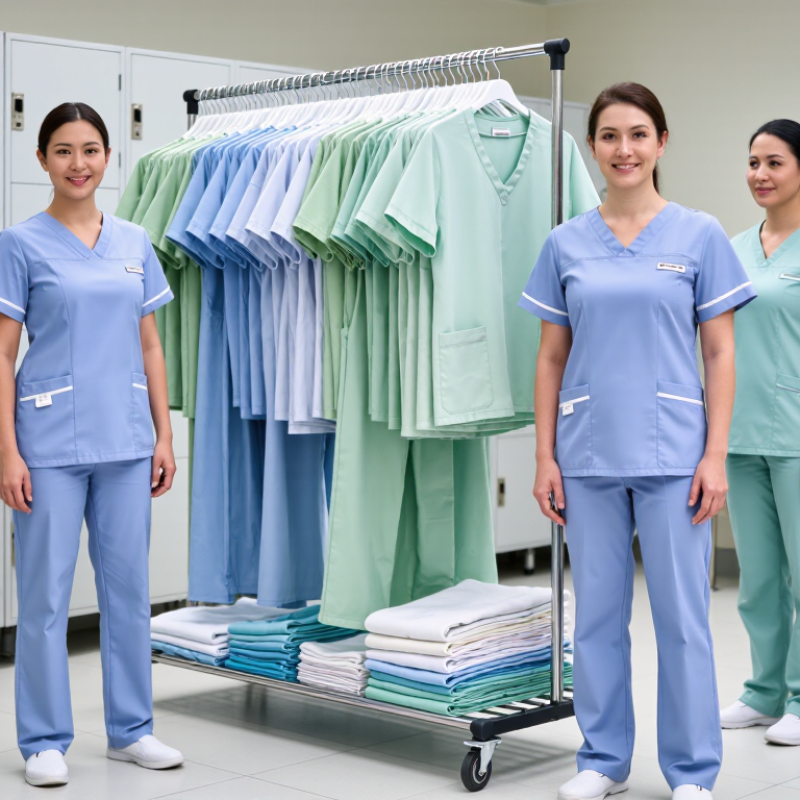
How to Choose a Hospital Uniform Manufacturing Partner

Define Your Hospital Uniform Requirements

Define Your Hospital Uniform Requirements

A reliable hospital uniform project begins with a clear picture of daily clinical work. Identify each role, from surgeons and nurses to reception staff and laboratory teams. Their clothing needs may differ significantly. Consider shift length, movement, storage, and laundering frequency. A nurse may need flexible fabric and secure pockets. A laboratory worker may require higher coverage and easy cleaning. Record preferred colors, sizing ranges, and department distinctions. Do not rely only on purchasing data. Speak with staff who wear the uniforms every day.

Tips: Create a simple requirement sheet. Include fabric weight, pocket placement, closure type, size measurements, color references, and expected order quantities. Request physical samples before approving bulk production. Test them during normal movement and washing. Small details matter.

Hospital uniforms should support hygiene procedures, professional appearance, and comfort without creating unnecessary restrictions. Ask potential manufacturing partners about fabric composition, colorfastness, seam strength, and quality inspections. Confirm whether they can maintain consistent sizing across repeat orders.

A written measurement chart reduces confusion. It is also useful to define acceptable variation before production begins. In practice, teams sometimes focus too heavily on appearance and overlook heat, friction, or difficult laundering. That mistake can increase replacement costs.

Requirements may change after real-world testing, and that is not failure. It shows the specification needs more honest feedback. Include staff comments, sample revisions, delivery expectations, and documentation responsibilities in the purchasing file.

Assess Manufacturing Quality and Compliance Standards

A hospital uniform partner should prove quality before discussing price. The WHO’s 2022 Global Report on Infection Prevention and Control states that 7 in 100 acute-care patients in high-income countries acquire at least one healthcare-associated infection. Fabric performance therefore matters beyond appearance. Ask for test results covering colorfastness, shrinkage, pilling, seam strength, and repeated industrial laundering.

Look for a documented quality system, preferably supported by current ISO 9001 certification. The ISO Survey 2022 recorded 1,265,216 ISO 9001 certificates worldwide, but certification alone does not guarantee reliable uniforms. Request the certificate’s scope, audit status, and production-site address. Check whether each batch has traceable fabric records, inspection reports, and calibrated testing equipment. Restricted-substance testing should also match the destination market and the garment’s intended skin contact.

Do not accept a polished sample too quickly. A sample can hide weak seams, uneven dye lots, or poor recovery after washing. Require pre-production samples and independent laboratory verification. Review the factory’s corrective-action records, not only its passing reports. Social compliance evidence also matters, especially for overtime, protective equipment, and worker training. If the uniform is marketed as protective clothing, verify the relevant protective standard; ordinary clinical uniforms are not automatically PPE. I would also test pockets and closures after repeated washing. That practical step is easy to overlook.

How to Choose a Hospital Uniform Manufacturing Partner

Assess each partner against quality and compliance criteria before placing an order. The suggested weighting reflects the relative importance of manufacturing control, material performance, product consistency, and regulatory evidence. It is an evaluation framework, not a legal requirement.

Key evidence may include ISO 13485 quality-management controls where applicable, AAMI PB70 barrier classification for protective garments, ISO 105 colorfastness testing, ISO 12947 abrasion testing, dimensional-stability reports, lot traceability, and documented social or environmental compliance audits.

Compare Materials, Customization, and Production Capabilities

Choosing a hospital uniform manufacturing partner requires more than comparing prices. Materials, customization, and production control directly affect comfort, safety, and daily performance.

Start with the fabric. Poly-cotton blends can balance durability and breathability, while stretch fabrics support movement during long shifts. Ask for fabric weight, shrinkage data, colorfastness results, and washing instructions.

Be cautious with antimicrobial claims. Request independent test evidence and clear performance limits. A reliable manufacturer should provide physical samples before any large order.

Customization should match real working conditions. Check size ranges, pocket placement, closure types, stitching density, and embroidery quality. A chest pocket may look useful, yet become uncomfortable under protective equipment.

Discuss color matching with physical swatches, not screen images. Production capability matters just as much. Review sampling procedures, minimum order quantities, quality checkpoints, and backup material plans.

Ask how the factory handles urgent reorders and uneven sizes. These details reveal practical experience.

Tips:

Wash-test samples several times. Measure seams after drying. Inspect ten garments from one batch. Compare them carefully.

Ask for a written production schedule and inspection record. If the first sample feels almost right, do not approve it too quickly. Small problems often grow across hundreds of uniforms.

Mistakes happen, even with experienced suppliers. The important question is how clearly they identify, correct, and document them.

Verify Supplier Experience, Reliability, and Communication

How to Choose a Hospital Uniform Manufacturing Partner

Verify Supplier Experience, Reliability, and Communication

Choosing a hospital uniform manufacturing partner requires more than comparing prices. Experience should be visible in production records, not claimed in polished emails. Ask how long the supplier has served healthcare facilities and which uniform types it regularly produces. Request sample sets, fabric specifications, size charts, and inspection reports. A capable partner can explain shrinkage control, colorfastness, seam strength, and repeated washing performance in practical terms.

Reliability appears in small, measurable habits. The supplier should confirm lead times, minimum quantities, production capacity, and backup plans in writing. Ask who checks fabric before cutting and who approves finished garments before packing. During a trial order, record delivery dates, measurement accuracy, stitching consistency, and packaging condition. One late carton may be explainable. Repeated excuses are not. Still, even careful suppliers can miss something. A loose thread or unclear size label deserves attention, not immediate rejection.

Communication often reveals the real working relationship. Choose a team that answers specific questions clearly and reports problems early. Confirm one contact person, response times, sample approval steps, and change-control procedures. Technical discussions should include wash testing, color references, embroidery placement, and emergency replenishment. Keep written records after every call. This protects both sides and reduces costly assumptions. I would also ask for a corrective-action example. The answer may be imperfect, but evasive communication is a serious warning sign. Trust grows through evidence, consistency, and honest updates.

Evaluate Pricing, Delivery Terms, and Long-Term Support

How to Choose a Hospital Uniform Manufacturing Partner

Pricing should be judged beyond the unit quote. McKinsey’s 2023 report on healthcare supply chains estimates that stronger planning and collaboration can reduce supply-chain costs by 10–15%. Request a full cost sheet covering fabric, embroidery, packaging, freight, duties, and replacement orders. Compare landed cost, not factory price. A $6 uniform can become $9 after delays and rework. Ask for fabric weight, shrinkage results, colorfastness data, and a pre-production sample. Test it after repeated washing. Hospital life is rough.

Delivery terms need measurable promises. The 2024 Resilinc Annual Report found that 73% of surveyed companies experienced a supply-chain disruption in the previous year. Therefore, require production lead times, shipping windows, minimum order quantities, and an agreed on-time delivery target. Clarify whether dates begin after deposit, sample approval, or artwork confirmation. That detail matters. Include buffer stock for core sizes and written rules for air freight during urgent shortages. However, emergency shipping may expose weak planning, not solve it.

Long-term support separates a supplier from a temporary seller. Ask how quickly defects are investigated, how size changes are managed, and whether historical patterns can be retained for repeat orders. The Healthcare Supply Chain Association emphasizes visibility and collaboration as resilience priorities. Request quarterly performance reviews using defect rate, response time, fill rate, and delivery accuracy. I would also inspect one production batch personally, if possible. Photos can hide stitching problems. A polished proposal is useful, but imperfect evidence deserves more attention.

How to Choose a Hospital Uniform Manufacturing Partner

Evaluation framework for pricing, delivery terms, quality assurance, compliance, and long-term support

Evaluation Area Recommended Data to Request Practical Planning Benchmark Why It Matters Warning Sign Suggested Weight
Unit Pricing Itemized price by garment style, fabric composition, size range, color, embroidery, packaging, and shipping term. Compare at least three written quotations using the same specifications. Separate product cost from freight, duties, testing, and sampling charges. Creates a reliable landed-cost comparison and prevents a low initial quote from hiding additional charges. Medium Risk
Price is provided without specifications or cost assumptions.
20%
Minimum Order Quantity Minimum quantity per style, color, size group, and purchase order; rules for repeat orders and size replenishment. Prefer minimums that match actual hospital demand and allow phased ordering without excessive inventory. Reduces overstock, obsolete designs, and cash tied up in slow-moving sizes. High Risk
Minimums are disclosed only after sampling or contract discussion.
10%
Sampling and Approval Sample fee, sample lead time, revision policy, size-set availability, and approval documentation. Allow approximately 1–3 weeks for a standard development sample, plus time for revisions and written approval. Written approval protects the hospital against differences in fit, color, construction, and decoration. Medium Risk
Production can begin without an approved reference sample.
10%
Production Lead Time Lead time from approved sample, purchase order, deposit, confirmed materials, and artwork approval to finished goods. For standard apparel, plan roughly 30–60 calendar days; allow more time for custom fabrics, complex trim, or peak seasons. Supports workforce onboarding, annual uniform cycles, and replacement-stock planning. High Risk
Only a verbal delivery promise is provided, with no milestone schedule.
15%
Delivery Terms Incoterm, shipping method, dispatch location, estimated transit time, freight responsibility, insurance, and customs documentation. Use a clearly stated Incoterm and request separate estimates for transport, duties, taxes, and local delivery. Clarifies who controls freight, bears risk, and manages import-related costs. High Risk
“Delivered price” is quoted without destination, customs, or tax details.
10%
Payment Structure Deposit percentage, balance timing, accepted payment methods, credit terms, and conditions for disputed or delayed goods. Link the final payment to agreed inspection, shipping documents, or acceptance terms rather than relying only on an informal promise. Balances supplier cash-flow needs with the buyer’s protection against late or nonconforming goods. High Risk
Full payment is required before production or inspection with no contractual remedy.
10%
Fabric and Color Consistency Fiber composition, fabric weight, shrinkage results, color standard, shade tolerance, and lot-to-lot approval process. Require a sealed reference sample, approved color standard, and documented fabric specifications for repeat orders. Maintains consistent appearance, comfort, durability, and laundering performance across departments and replenishment cycles. Medium Risk
Fabric is described only as “premium” or “medical grade” without measurable specifications.
10%
Quality Control Inspection stages, measurement tolerances, defect classification, final inspection report, and corrective-action process. Use documented in-line and final inspections, with agreed measurement tolerances and acceptance criteria before production. Reduces sizing problems, sewing defects, missing components, and costly rework after delivery. High Risk
Quality is checked only after shipment or by visual inspection without records.
15%
Compliance and Testing Applicable textile labeling, chemical, flammability, colorfastness, social-compliance, and product-safety documentation. Match testing and labeling requirements to the destination market and intended use; keep current records for each relevant fabric or trim. Helps meet legal, procurement, occupational-safety, and infection-control requirements where applicable. High Risk
Certificates are expired, unverifiable, or unrelated to the supplied materials.
10%
After-Sales Support Defect-resolution process, replacement policy, response time, spare-stock plan, and contact escalation procedure. Agree on a written response target, corrective-action timeline, and replacement or credit process before the first order. Protects uniform availability when defects, shortages, or urgent replenishment needs occur. Medium Risk
No named support contact or documented remedy is available.
5%
Long-Term Capacity Monthly production capacity, backup material sources, workforce continuity, machinery capability, and business-continuity plan. Confirm capacity for forecasted demand and require advance notice of material, factory, or subcontracting changes. Improves supply continuity for multi-site hospitals and recurring uniform programs. Medium Risk
Capacity depends on undisclosed subcontractors or unavailable materials.
5%
Recommended decision rule: Select the partner with the strongest total value across landed cost, dependable delivery, documented quality, compliance readiness, and long-term support—not simply the lowest unit price.

FAQS

What quality tests should a hospital uniform supplier provide?

Request results for colorfastness, shrinkage, pilling, seam strength, and repeated industrial laundering. Fabric performance matters after many washes.

How can I verify a supplier’s quality system?

Ask for current certification details, audit status, production-site address, and certification scope. Check batch records and calibrated testing equipment.

Why should uniforms undergo independent laboratory testing?

A polished sample may hide weak seams or uneven dye lots. Independent testing provides stronger evidence before bulk production begins.

What records should be traceable for each uniform batch?

Look for fabric records, inspection reports, test results, and production details. Clear records make problems easier to locate.

How can I assess a supplier’s manufacturing experience?

Ask about healthcare projects, uniform types, sample sets, fabric specifications, size charts, and inspection reports. Experience should appear in records.

What reliability details should a supplier confirm in writing?

Confirm lead times, minimum quantities, production capacity, and backup plans. Record delivery dates and packaging condition during a trial order.

Which communication practices indicate a dependable partner?

Choose one contact person and define response times. Confirm sample approvals, change controls, wash testing, color references, and replenishment procedures.

What practical details should be checked after repeated washing?

Inspect pockets, closures, loose threads, labels, stitching, and measurements. Small defects matter, though one mistake may not prove systemic failure.

How should a supplier handle production problems?

Request a corrective-action example and review how problems were reported. Honest updates build trust. Evasive answers deserve careful reconsideration.

Are ordinary clinical uniforms automatically protective clothing?

No. Protective claims require verification against the relevant safety standard. A regular uniform should not be treated as protective equipment.

Conclusion

Choosing the right Hospital Uniform Manufacturing partner begins with clearly defining your organization’s needs, including uniform types, functional features, sizing requirements, colors, branding options, and expected order volumes. A suitable manufacturer should demonstrate consistent production quality, use appropriate materials, and follow recognized safety, hygiene, and compliance standards. It is also important to compare fabric choices, customization services, sampling processes, production capacity, and the ability to support both standard and specialized uniform designs.

Before making a decision, review the supplier’s industry experience, reliability, communication practices, and quality control procedures. Request clear information about pricing, minimum order quantities, production schedules, shipping arrangements, and payment terms. A dependable partner should provide transparent service, realistic delivery commitments, responsive communication, and ongoing support after delivery. By evaluating these factors together, hospitals and healthcare organizations can select a manufacturing partner that offers durable uniforms, stable supply, professional service, and long-term value.

Clara

Clara

Clara is a professional marketing specialist with a deep understanding of the company’s products, customers, and industry landscape. With a strong ability to connect technical knowledge with practical business value, she creates clear, informative, and engaging content for the company’s......