
Apparel Manufacturing Insights & Blog
Discover fashion trends, garment sourcing tips, and sustainable manufacturing practices from Posh Garments Ltd.
Quality, Compliance & Sourcing Guides
Ethical manufacturing insights — from organic fabric selection to global logistics.
Women's, Men's & Kids' Garments
Expert articles on garment production, OEM/ODM apparel manufacturing, and export trends.
7 Tips for Buying Recycled Polyester Apparel
Table of Contents
Recycled Polyester Apparel can look like a simple sustainability choice: a familiar shirt, a recycled-content label, and a promise to use less virgin material. The data gives useful context. Textile Exchange’s Materials Market Report 2024 estimates that global fiber production reached 124 million tonnes in 2023, with polyester accounting for about 57 percent. The report puts recycled polyester production at roughly 12.5 million tonnes, or around 12 percent of polyester output. The scale is significant. So is the remaining gap.
A label alone cannot show whether a garment will last, whether its recycled-content claim is independently verified, or what feedstock was used. Textile Exchange’s Claire Bergkamp, its chief executive, has emphasized in public commentary that material choices must be part of wider change across the textile system. That perspective matters when comparing two jackets on a store rack. Check the stated recycled-content percentage, look for credible certification such as GRS or RCS, and inspect seams, fabric weight, and care instructions. Small details count.
Still, recycled does not automatically mean better. Polyester remains a synthetic fiber, and garment use and washing can release microfibers. A durable piece worn often may be a more thoughtful purchase than a flimsy item with an impressive label. That distinction is easy to miss. These seven tips will help readers assess claims, construction, traceability, and care—without treating a recycled tag as proof of perfect sustainability.
How Recycled Polyester Is Made and Used in Apparel
Recycled polyester is usually made from plastic waste, often PET bottles or discarded textiles. The material is sorted, cleaned, and shredded into small flakes. Those flakes are melted and pushed through fine holes to form filaments. The filaments are stretched, cooled, and spun into yarn. Some producers use chemical recycling, which breaks plastic down before making new fibers. The process depends on the feedstock and equipment. Not every recycled fiber has the same quality.
In apparel, recycled polyester appears in fleece, T-shirts, jackets, linings, and sportswear. It dries quickly and holds its shape, but it can feel less breathable than some natural fibers. Check what percentage of a garment is recycled polyester, and whether it is blended with other materials. A clear label is more useful than a vague sustainability claim. Feel the fabric and consider how you will wear and wash it. Gentle washing can reduce fiber shedding, though it cannot eliminate it. Recycled does not mean impact-free. That distinction is easy to overlook.
How to Verify Recycled Content and Product Claims
A recycled polyester claim needs a paper trail, not just a green hangtag. Textile Exchange’s Materials Market Report 2024 puts recycled polyester at about 12% of global polyester production in 2023. Most recycled polyester came from PET bottles rather than discarded textiles. That difference matters. Bottle-based fiber may use recycled material, but it does not show that an old garment became a new one.
Ask whether the stated percentage applies to the whole garment or only one component, such as its shell fabric. Request product-specific documentation, such as a transaction certificate, and check that its product details and recycled-content percentage match the item. A Global Recycled Standard or Recycled Claim Standard certificate can support traceability. However, a supplier’s scope certificate alone does not verify the exact garment in your hand. Check the certificate holder and validity dates, too.
Look for clear wording about the source of the recycled feedstock and who verified the claim. If a seller cannot identify either, treat the claim cautiously. Some suppliers share only partial records. That is useful, but not conclusive; I would want more before relying on it. A small label can hide a complicated supply chain. Ask one more question.
7 Tips for Buying Recycled Polyester Apparel - How to Verify Recycled Content and Product Claims
| Tip | What to Check | Useful Evidence | Why It Matters |
|---|---|---|---|
| 1 | Read the exact fiber-content wording | Look for a specific statement such as “100% recycled polyester” or “the shell contains 60% recycled polyester,” rather than a general “made with recycled materials” claim. | A precise percentage and the part of the garment it refers to make the claim easier to assess. |
| 2 | Check what the percentage applies to | Confirm whether the percentage refers to the whole garment, a fabric, or only the polyester portion. Ask how trims, linings, elastane, and other components are treated in the calculation. | A percentage for one fabric component is not necessarily the percentage of recycled material in the entire product. |
| 3 | Ask about the recycled feedstock | Check whether the polyester is described as post-consumer recycled material, pre-consumer recycled material, or a stated mix. Request an explanation of the material source if this distinction matters to you. | “Recycled polyester” alone does not identify whether the input came from used products or manufacturing leftovers. |
| 4 | Look for product-specific documentation | Request records that connect the recycled-content claim to the product, fabric, or production batch, such as a transaction document or supporting supplier records. | General sustainability statements may not establish the content of the particular item being sold. |
| 5 | Understand what a certificate covers | If a recognized recycled-content standard is cited, check the certificate’s scope, validity dates, covered facility or activity, and whether relevant transaction records are available. | A facility scope certificate indicates that a site is covered by a certification system; by itself, it does not confirm the recycled content of every item from that site. |
| 6 | Check whether the claim is independently verified | Look for a named verification or certification scheme, a certificate number, and a way to check the certificate with the issuing scheme or certification body. | Specific, checkable evidence is more informative than an unsupported claim or a generic recycling symbol. |
| 7 | Treat broad environmental claims with care | Prefer claims that state exactly what is recycled and how much. Check the seller’s explanation for phrases such as “eco-friendly,” “sustainable,” or “better for the planet.” | Recycled content is one product attribute; it does not by itself establish a garment’s total environmental impact or recyclability at end of life. |
Buyer’s note: Certification requirements and consumer-label rules can vary by standard, product, and market. When a claim is unclear, ask the seller for the calculation method and documentation for the specific item.
How to Assess Fabric Quality, Fit, and Construction
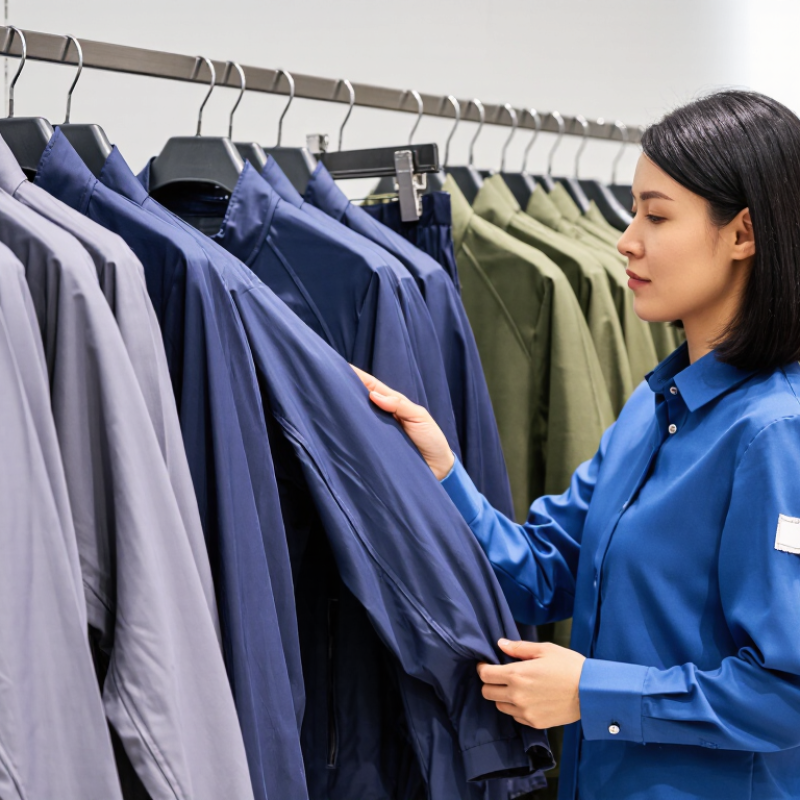
Recycled polyester can feel smooth, crisp, or unexpectedly warm, so a quick touch is only a starting point. Check the fabric weight by holding a panel against the light; thin areas may show through when stretched. Rub a small section gently between your fingers and look for pilling or loose fibers. Then stretch the fabric and let go. It should recover without staying baggy. Check the care label for fiber content and washing guidance, since recycled content alone does not tell you how a garment will wear. Small details matter.
Fit depends on more than the size printed on a tag. Compare garment measurements with a piece you already wear, especially across the chest, waist, and inseam. Move your arms and sit down if you can; tightness at the shoulders or pulling seams can reveal problems a mirror misses. Inspect stitching at stress points, such as pockets, hems, and underarms. Seams should lie flat, with no skipped stitches or dangling threads. Check zippers and closures, too. I still sometimes overlook sleeve length when a garment looks good on the hanger. A second try-on can help. Recycled polyester may also feel different after washing, so follow care instructions and reassess the fit. A neat finish is useful, but it cannot guarantee long-term durability.
7 Tips for Buying Recycled Polyester Apparel
A practical checklist for assessing fabric quality, fit, and construction.
The bars count the specific checks included in this guide; they are not product ratings or laboratory results. Inspect the fabric surface and recovery, try the garment through a full range of movement, and look for even stitching and reinforced stress points. Check the fiber label and any recycled-content certification claim, then review care instructions and the seller’s return policy. Certifications can help verify recycled-content claims, but do not by themselves guarantee garment performance.
Which Certifications and Supply Chain Details to Check
A recycled-content logo is a useful starting point, not proof on its own. Check whether the supplier holds a current certificate from a recognized certification program, such as GRS or RCS. Then confirm the certificate covers the actual facility and process involved. A spinning mill’s certificate may not cover the garment factory.
Ask for transaction documents linking recycled polyester from the recycler or yarn producer to the fabric and finished garment. Check that company names, dates, product descriptions, and material percentages match across documents. Look for whether the recycled content is pre-consumer or post-consumer, and how each is defined. Details matter. If a supplier can share only a certificate, ask what product-specific records support the claim.
Also ask how the material is tracked between production stages. Physical segregation and other chain-of-custody methods can affect what a claim means, so request a plain-language explanation. GRS includes additional social, environmental, and chemical requirements; RCS focuses on recycled-content verification. Neither label tells you everything about garment quality or durability. I have seen paperwork look reassuring while leaving gaps between fabric and finished product. That may be an honest documentation delay, but it deserves a follow-up before purchase. Keep the answers, certificate scope, and supporting records together for later checks.
How to Compare Durability, Care Needs, and Overall Value
To compare recycled polyester apparel, inspect the fabric and stitching, not just the recycled-content claim. Hold the fabric toward light; very thin areas may look uneven or feel flimsy. Check seams at the underarm and waistband, where movement can stress stitches. Gently stretch a panel and release it. It should recover without sagging, though blends and knit structures behave differently. Feel the fabric.
Tip: Look for an even surface and secure seams, then check the care label before buying. Some garments tolerate frequent washing, but heat can damage elastic trims and may set odors. Wash inside out on a cool cycle, use mild detergent, and air-dry when practical. This can reduce wear, though it will not prevent every snag or pill. If a garment needs delicate, costly care, include that time and expense in your comparison.
Tip: Compare expected wears, repairability, and price together. A higher-priced item may offer better value if its hems are secure and closures can be replaced. Ask how much recycled fiber it contains and whether the seller can document that claim. Still, percentages alone do not predict lifespan. A fabric that feels sturdy in-store may cling or pill after months of friction. Consider where you will wear it and whether you can care for it consistently.
FAQS
No. Ask for a current certificate and product-specific records. A logo alone may not show which garment or factory it covers.
Request transaction records linking the recycled fiber to the yarn, fabric, and finished garment. Check names, dates, product descriptions, and percentages. Small mismatches deserve questions.
Confirm its scope includes the facility and process involved. A certificate for a spinning mill may not cover the garment factory. Check the details.
Ask how material is tracked between production stages. Physical segregation is one method, but suppliers should explain their approach in plain language.
No. Some certification programs check additional production standards, while others focus on recycled content. Neither alone proves durability or garment quality.
Hold the fabric toward a light and look for thin, uneven areas. Check underarm seams and waistbands. Gently stretch a panel, then see whether it recovers.
Check the care label. A cool wash, mild detergent, and air-drying may reduce wear. Heat can damage elastic trims. It will not prevent every snag.
Consider likely wears, repair options, care costs, and price together. Secure hems and replaceable closures may help. But a sturdy feel in-store cannot predict months of friction.
Conclusion
Choosing Recycled Polyester Apparel involves more than checking a product label. Recycled polyester is typically made by processing recovered plastic materials into fibers, which can then be used in a range of clothing. To judge whether a garment is a good fit for your needs, look for clear information about its recycled content and consider how specific and verifiable the product claims are.
Assess the fabric’s feel, fit, stitching, and finishing, and check for relevant certifications or details about how the material moves through the supply chain. Compare expected durability, care instructions, and comfort with the garment’s price and intended use. A thoughtful comparison can help you find apparel that balances recycled content with quality, practicality, and long-term value.

Blog Tags: