
Apparel Manufacturing Insights & Blog
Discover fashion trends, garment sourcing tips, and sustainable manufacturing practices from Posh Garments Ltd.
Quality, Compliance & Sourcing Guides
Ethical manufacturing insights — from organic fabric selection to global logistics.
Women's, Men's & Kids' Garments
Expert articles on garment production, OEM/ODM apparel manufacturing, and export trends.
Who Are the Top School Uniform Suppliers Worldwide?
Table of Contents
Choosing the right school uniform supplier is more than a price comparison. Schools need dependable sizing, durable fabrics, consistent colors, and deliveries that arrive before term begins. A shirt that fades after several washes or a delayed shipment can disrupt an entire school’s routine.
The market is substantial. Grand View Research’s 2024 School Uniform Market Size, Share & Trends Analysis Report estimated the global market at USD 25.9 billion in 2023. It projected a 5.6% compound annual growth rate from 2024 to 2030. These figures describe market growth, not a ranking of individual companies. Definitions and estimates can also differ between research firms. That distinction matters.
This guide examines leading suppliers through practical criteria: manufacturing capacity, product range, quality controls, customization, and regional reach. It also considers whether suppliers can support repeat orders without sacrificing fit or fabric performance. Buyers should ask for samples, size specifications, and clear delivery schedules before committing. Small checks matter.
School Uniform Supply is a global sourcing decision, but the best choice is rarely the biggest name alone. A supplier’s claims deserve scrutiny, and published market data cannot replace direct evaluation. Even a polished catalogue tells only part of the story.
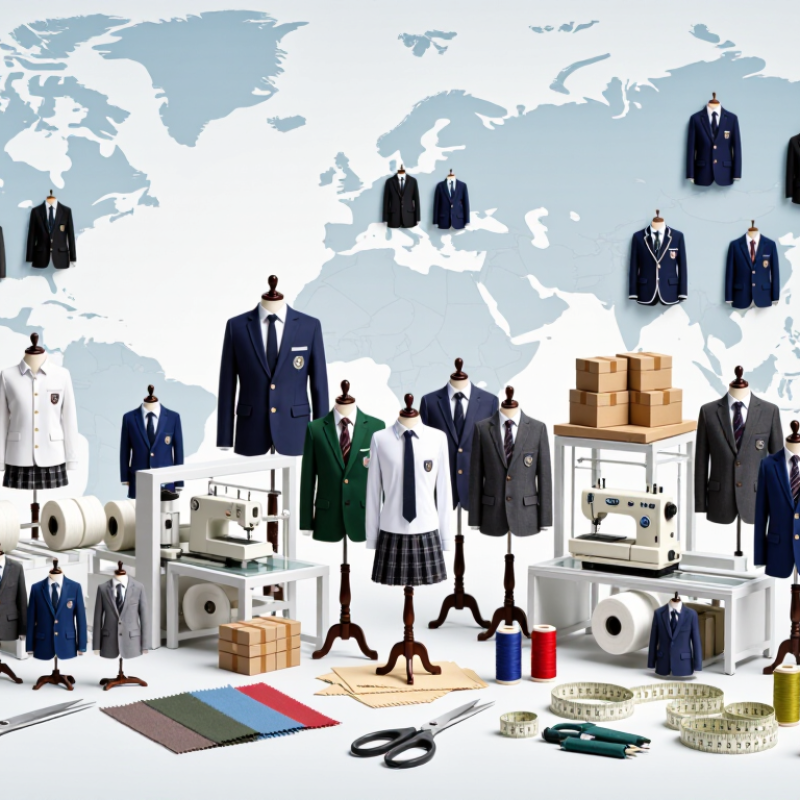
How School Uniform Suppliers Serve Schools Worldwide
School uniform suppliers serve schools by turning broad requirements into garments students can wear every day. They usually begin by confirming colors, approved styles, size ranges, and annual quantities. Clear measurements matter. A sample jacket should be checked for sleeve length, pocket placement, and movement, not just appearance. Suppliers may also recommend fabrics suited to local weather, such as lighter weaves for warm regions or layered options for colder seasons.
Serving schools across different regions requires careful coordination. Suppliers plan production around academic calendars, allowing time for fitting sessions, alterations, and delivery. They may provide size sets so staff can compare garments on students before placing a larger order. That takes coordination. Reliable suppliers also explain fabric care, expected wear, and how schools can reorder common sizes when enrollment changes. These details help reduce confusion for families and administrative teams.
Uniform needs are not identical everywhere. Some schools prioritize durable trousers for active days, while others need formal pieces for assemblies. Suppliers should ask about daily routines before proposing a standard package. A size chart helps, but it cannot capture every student’s comfort or preferred fit. It is not always tidy. Feedback from students and staff can reveal issues, such as stiff collars or skirts that restrict movement, before those problems affect a full order.
Global Textile Fiber Supply: Context for School Uniform Suppliers
School uniform suppliers source fabrics from a global textile industry. Polyester and cotton are among the largest fiber categories, while manmade cellulosic fibers and wool represent smaller volumes. These figures show global fiber production—not uniform-specific use or supplier market share.
Selected global fiber production in 2023, approximately millions of tonnes. Values are rounded. Source: Textile Exchange, Materials Market Report 2024.
Criteria for Identifying Leading Uniform Suppliers
A leading school uniform supplier should be judged by evidence, not polished photographs or broad promises. Start with fabric performance: ask how garments hold up after repeated washing, abrasion, and exposure to sunlight. Request sample pieces and inspect seams, buttons, hems, and color consistency. Small details matter. A shirt that twists after laundering can create daily frustration for students and staff.
Sizing and production capacity deserve equal attention. Suppliers should provide clear measurement charts, inclusive size ranges, and a practical process for handling exchanges. Ask how they manage peak-season orders and whether they can maintain consistent specifications across repeat batches. Ask for proof. Test reports, material details, and documented quality checks are more useful than unsupported claims. Clear answers indicate operational discipline, though a tidy document cannot guarantee a flawless shipment.
Responsible sourcing, dependable delivery, and responsive communication also distinguish strong suppliers. Schools can ask where materials are made, how production conditions are monitored, and what steps reduce fabric waste. Check references from organizations with similar order sizes, then compare actual delivery records with stated timelines. No supplier is flawless. Evaluation can also reflect a school’s priorities too heavily; the cheapest option may not last, while premium features may add little value. A balanced assessment weighs durability, fit, service, transparency, and total cost over the uniform’s expected life.
Major Suppliers Across Key Global Markets
School-uniform supply is regional, not a single global leaderboard. Grand View Research valued the global school-uniform market at USD 25.6 billion in 2023, projecting 4.5% annual growth through 2030. In Asia-Pacific, established textile ecosystems support high-volume production of shirts, trousers, skirts, and knitwear. Suppliers there often benefit from scale and fabric access, though lead times vary by country and season. Europe and North America rely more on nearby production, distribution networks, and school-specific customization. Fit consistency matters.
Across markets, buyers compare durability, replenishment speed, sizing accuracy, and material claims. Textile Exchange’s Materials Market Report 2024 put global fiber production at 124 million tonnes in 2023, with polyester accounting for about 57%. That scale helps explain the use of blended, easy-care fabrics, but it does not prove a uniform will last. Suppliers in Africa and Latin America can offer shorter routes for local buyers, yet production capacity and fabric choices differ widely. Small details get missed. Sample wash tests and repeat-order checks reveal more than a polished catalogue. Public reports track market size and fiber output, not supplier-level quality.
Comparing Products, Customization, and Production Capabilities
Comparing school-uniform suppliers takes more than checking catalogues. Look at fabric weight, seam finishing, size range, and replacement availability. A navy blazer should keep its shape after repeated wear; a polo collar should not curl after washing. Ask for wash-test results, shrinkage limits, and sample garments before approving a large order. Small details matter.
Customization also needs practical scrutiny. Can the supplier match your school’s colors across shirts, knitwear, and outerwear? Check embroidery placement, label options, minimum order quantities, and whether later orders can match the original shade. Textile Exchange’s Materials Market Report 2024 estimates global fiber production reached 124 million tonnes in 2023, with polyester accounting for about 57%. That scale signals broad material availability, not uniform quality. Ask suppliers to identify fiber blends and explain how they test durability. A polished sample is not enough.
Production capability shows up in lead times, capacity planning, and communication when specifications change. Request a written production schedule, pre-shipment inspection records, and a clear process for handling sizing defects. Compare these records, not just promised output. Some suppliers may offer many customization options but struggle to repeat them consistently. That is easy to miss. A short pilot order can reveal problems, though it adds time and cost. Good comparisons leave room for that trade-off.
Factors Schools Consider When Choosing a Supplier
Who Are the Top School Uniform Suppliers Worldwide?
Factors Schools Consider When Choosing a Supplier
Schools should compare suppliers on fabric quality, sizing, delivery reliability, and transparent sourcing—not price alone. Textile Exchange’s Materials Market Report 2024 estimates that global fiber production reached 124 million tonnes in 2023. This figure covers all textiles, not school uniforms specifically, but it highlights the scale of material sourcing. Schools can ask suppliers to identify fiber content and explain how they check their supply chains. The OECD’s Due Diligence Guidance for Responsible Supply Chains in the Garment and Footwear Sector offers a practical framework for assessing sourcing risks.
Uniforms face repeated washing, playground wear, and changing sizes. Request samples, then test seams, color retention, and fabric comfort after washing. Ask for written size measurements and a clear plan for replacing defective items or managing late deliveries. The Ellen MacArthur Foundation’s A New Textiles Economy report found that less than 1% of material used to make clothing was recycled into new clothing. That finding is not specific to uniforms, but it gives schools a reason to ask about repair, reuse, and end-of-life options. Price is not the whole story. A low quote can still mislead if garments wear out quickly; schools should compare expected lifespan as well as unit cost.
FAQS
Inspect fabric, seams, buttons, and hems. Wash a sample and check whether its color fades or its shape changes. Photos are not enough.
Samples let staff test comfort, stitching, and fit before placing a large order. A shirt may look sturdy but twist after washing. That is worth checking.
Ask for clear measurement charts, inclusive size ranges, and an exchange process. Check how the supplier handles garments that fit poorly. Size charts can still be imperfect.
Request a written production schedule and ask how peak-season orders are managed. Compare stated timelines with actual delivery records from similar schools.
Check color matching across shirts, knitwear, and outerwear. Ask about embroidery placement, minimum quantities, and repeat-order consistency. Shades can drift.
Ask for fabric details, wash-test results, shrinkage limits, and inspection records. Documents help, but they cannot guarantee a flawless shipment.
Ask where materials are made, how production conditions are monitored, and what steps reduce fabric waste. Clear answers matter. Verification matters too.
Not automatically. Compare unit price with expected garment life, repair options, and replacement costs. A cheap uniform may wear out quickly.
Yes. A pilot order can reveal fit or production problems before a larger purchase. It also adds time and cost. Schools should weigh that trade-off.
Conclusion
School uniform suppliers play an important role in helping schools create consistent, practical clothing programs for students across different regions. A strong School Uniform Supply partner can provide dependable garments, clear size options, and steady production while adapting to local climates, school preferences, and student needs. Leading suppliers are often assessed by the quality and durability of their materials, the reliability of delivery, the range of available products, and their ability to support schools of different sizes.
When comparing suppliers, schools may consider how easily designs, colors, sizes, and details can be customized, as well as whether production capacity can meet enrollment and replacement needs throughout the year. Cost, communication, ordering convenience, and long-term service also matter. By weighing these factors together, schools can choose a supplier that balances quality, flexibility, and dependable support, helping students feel comfortable and ready for the school day.

Blog Tags: