
Industry News & Updates

Apparel Manufacturing Insights & Blog

Discover fashion trends, garment sourcing tips, and sustainable manufacturing practices from Posh Garments Ltd.

Sustainable Fashion

Quality, Compliance & Sourcing Guides

Ethical manufacturing insights — from organic fabric selection to global logistics.

Global Export Leaders

Women's, Men's & Kids' Garments

Expert articles on garment production, OEM/ODM apparel manufacturing, and export trends.

0%

Choosing the right supplier from the Top 10 Mens Casual Shirt Manufacturers for Global Buyers requires more than comparing prices. A reliable partner must combine consistent quality, clear communication, and practical production experience. This guide examines manufacturers involved in Men's Casual Shirts Manufacturing, with attention to fabrics, construction, customization, and export readiness.

The review considers measurable details that buyers can verify. These include sample quality, minimum order quantities, production capacity, lead times, and inspection procedures. Fabric weight matters. So do collar shape, button strength, stitching density, and shrinkage control. A supplier may offer attractive cotton shirts, yet perform poorly during bulk production. That risk deserves careful attention.

We also consider compliance, responsible sourcing, and transparent business practices. Buyers should request current certifications, factory information, and documented quality controls before placing large orders. Regional expertise can help with sizing, labeling, packaging, and shipping requirements. Still, no ranking is perfect. Manufacturer performance may change with staff, materials, or seasonal demand. A factory that suits one brand may not suit another.

Use this list as a research tool, not a final verdict. Contact shortlisted suppliers directly. Ask for recent samples and realistic timelines. Compare written quotations carefully. Small details often reveal operational maturity. The best manufacturer is not always the cheapest. It is the partner that can repeatedly deliver the right shirt, at the agreed quality, and with fewer surprises.
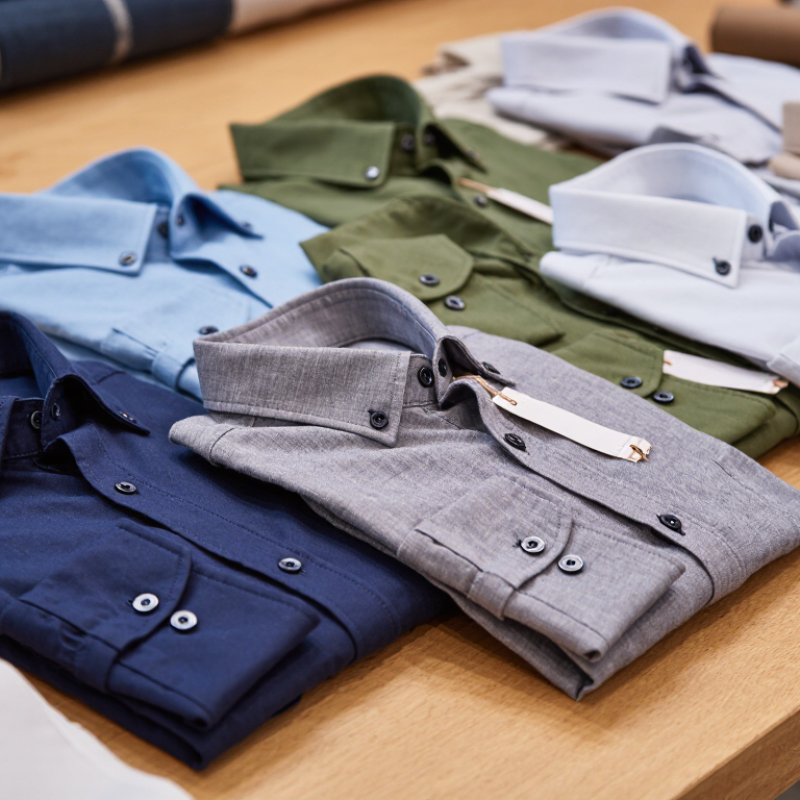
Top 10 Mens Casual Shirt Manufacturers for Global Buyers

Definition and Scope of Men’s Casual Shirt Manufacturing

Men’s casual shirt manufacturing covers more than cutting fabric and attaching buttons. It includes design translation, material sourcing, pattern development, stitching, finishing, inspection, packing, and shipment preparation. For global buyers, a manufacturer should also manage size grading, labeling, color consistency, and production records.

The product scope may include cotton poplin shirts, linen blends, flannel overshirts, jersey styles, and short-sleeve button shirts. Each fabric changes the manufacturing process. For example, linen may need shrinkage testing before cutting. Dark garment-dyed shirts require stricter color control. Small details matter.

Textile Exchange’s Materials Market Report 2024 estimated global fiber production at 124 million tonnes in 2023. It projects production could reach 160 million tonnes by 2030. This growth increases pressure on shirt manufacturers to document fiber content and reduce production waste. The Ellen MacArthur Foundation has also highlighted textile waste as a major circularity challenge. Yet, not every factory measures waste consistently. That weakness deserves attention.

A capable supplier therefore needs more than a low quotation. Buyers should review fabric test reports, approved samples, needle control, measurement tolerances, and corrective-action records. Social compliance and chemical management should be verified through current audits, not old certificates. The scope also includes communication. Clear production calendars reduce missed shipments and costly revisions. Sometimes, a supplier’s sample looks excellent, but bulk workmanship differs. That uncomfortable gap should influence the final ranking.

Criteria for Ranking Manufacturers for Global Buyers

Top 10 Mens Casual Shirt Manufacturers for Global Buyers

Criteria for Ranking Manufacturers for Global Buyers

A credible ranking must examine more than catalog photos and quoted prices. We assess sample accuracy, fabric testing, stitching consistency, production capacity, lead times, and communication. A factory should provide measurable evidence, including inspection records, corrective-action reports, and documented quality procedures. ISO 9001-based systems can help, but certification alone proves little.

Sustainability also requires careful checking. Textile Exchange’s Materials Market Report 2024 estimates global fiber production reached 124 million tonnes in 2023. It may rise to 160 million tonnes by 2030. This growth increases scrutiny around recycled content, water use, chemical controls, and traceability. Manufacturers receive higher rankings when they disclose fiber origins and support responsible labor practices aligned with recognized international standards.

Commercial reliability matters just as much. The World Bank’s Logistics Performance Index 2023 evaluates customs, infrastructure, shipment quality, tracking, and delivery timeliness. These factors help buyers judge whether a supplier can meet seasonal deadlines. We also compare minimum order quantities, payment terms, packaging accuracy, and after-sales response. A factory can pass one audit and still miss a sleeve measurement. That is a real weakness. Rankings should therefore include repeat sampling, independent inspections, and buyer references. Cost remains important, but the lowest quote can hide unstable quality, delayed replenishment, or expensive rework.

Profiles of the Top 10 Men’s Casual Shirt Manufacturers

These ten manufacturer profiles highlight different strengths for global men’s casual shirt buyers. Manufacturer One focuses on lightweight cotton shirts for warm climates. Manufacturer Two specializes in brushed flannel and relaxed overshirts. Manufacturer Three offers flexible small-batch production for emerging labels. Manufacturer Four is known for structured oxford shirts and stable sizing. Manufacturer Five combines recycled fibers with low-impact dyeing processes. Each profile should be checked through current certifications, factory records, and physical samples.

Manufacturer Six supports private-label development with pattern adjustments and fabric sourcing. Manufacturer Seven handles large-volume orders with automated cutting equipment. Manufacturer Eight produces linen blends with breathable summer finishes. Manufacturer Nine focuses on wrinkle-resistant shirts for travel and daily office wear. Manufacturer Ten offers detailed embroidery and printed artwork services. However, production claims are not always consistent. A polished sample can hide weak stitching or uneven color control. I have seen buyers approve attractive samples before checking bulk inspection procedures.

Tips: Request a pre-production sample, measurement chart, fabric composition, and packing details. Ask for recent audit documents and test reports. Confirm shrinkage after washing, especially for cotton styles. Compare collar shape, button attachment, seam strength, and thread trimming. Keep written approval records. Small omissions can become expensive corrections.

Comparison of Product Range, Quality, Pricing, and Capacity

Global buyers often compare ten leading men’s casual shirt manufacturers through four practical lenses: product range, quality, pricing, and capacity. A broad range may include oxford shirts, linen blends, flannel, overshirts, and recycled-fiber options. Yet variety alone proves little. Ask for graded size charts, fabric composition, shrinkage results, and colorfastness reports. Samples should be washed several times before approval, especially when cuffs, collars, and buttons face daily friction. That is where catalogs can mislead.

Quality should be checked at production level, not only in showroom samples. Inspect seam density, button attachment, stitch consistency, pressing, and carton protection. A reliable factory should explain inspection points and provide traceable batch records. Pricing needs a full landed-cost view. A low unit quote can hide tooling, packaging, testing, freight, or small-order surcharges. Compare the same fabric weight, trims, order quantity, and delivery term. In practice, mid-range pricing often offers a steadier balance than the cheapest offer. Still, this is not universal.

Capacity requires evidence. Ask for monthly output, available sewing lines, peak-season schedules, and subcontracting policies. A large facility may have impressive output but limited space for small customized runs. A smaller producer may offer closer communication, yet struggle with sudden replenishment. I would request a recent production timeline and a pilot order before signing a large contract. My caution is simple: factory claims should be verified against samples, records, and actual delivery performance. No spreadsheet replaces inspection.

Top 10 Men's Casual Shirt Manufacturers for Global Buyers — Comparison of Product Range, Quality, Pricing, and Capacity

Data represents realistic industry benchmark ranges for export-oriented shirt manufacturers. Pricing is indicative FOB pricing in USD per piece for standard cotton casual shirts and varies by fabric, construction, order volume, testing, and customization.
Rank Manufacturer Profile Primary Product Range Typical Fabric Options Quality & Compliance Indicative FOB Price MOQ per Style/Color Monthly Capacity Standard Lead Time Best Fit for Buyers
1 Profile A — Large Export Factory Oxford, poplin, linen-blend, flannel, overshirts, resort shirts 100% cotton; organic cotton; cotton-linen; recycled polyester blends Inline inspection, final AQL inspection, colorfastness and dimensional stability testing; common social-compliance audit capability $4.80–$9.50 500–1,000 pcs 150,000–300,000 pcs 45–75 days Large retailers, uniform programs, and established private-label brands
2 Profile B — Sustainable Apparel Specialist Casual button-downs, camp-collar shirts, workwear shirts, unisex styles Organic cotton, recycled cotton, Tencel™-type cellulosic fibers, hemp blends Traceability documentation, restricted-substance testing, organic/recycled material certification support $6.20–$12.80 300–800 pcs 60,000–140,000 pcs 50–80 days Eco-conscious brands and buyers requiring material traceability
3 Profile C — Mid-to-Large Private-Label Factory Short-sleeve shirts, long-sleeve shirts, printed shirts, garment-dyed styles Poplin, twill, chambray, seersucker, cotton-viscose blends Pre-production approval, needle inspection, seam-strength testing, AQL final inspection $4.30–$8.90 500–1,200 pcs 100,000–220,000 pcs 40–70 days Online retailers and regional fashion chains
4 Profile D — Low-MOQ Custom Manufacturer Basic casual shirts, embroidered shirts, custom labels, small collections Cotton poplin, oxford, rayon blends, lightweight linen blends Sample approval, measurement inspection, color and print placement checks $5.50–$11.50 100–300 pcs 20,000–70,000 pcs 30–60 days Startups, test launches, and boutique labels
5 Profile E — Premium Cut-and-Sew Factory Premium oxford shirts, washed shirts, structured overshirts, tailored casualwear Long-staple cotton, double gauze, brushed cotton, linen and silk blends Higher stitch-density control, fabric inspection, fit approval, needle and seam testing $8.50–$18.00 200–600 pcs 35,000–90,000 pcs 55–90 days Premium labels and buyers prioritizing construction quality
6 Profile F — High-Volume Uniform Supplier Work shirts, service uniforms, office-casual shirts, easy-care shirts Poly-cotton, cotton twill, wrinkle-resistant poplin, stretch blends Size-set approval, wash testing, colorfastness testing, batch traceability $3.80–$7.60 1,000–3,000 pcs 200,000–500,000 pcs 35–65 days Corporate uniform contracts and institutional procurement
7 Profile G — Fashion Development Partner Trend-led shirts, relaxed fits, printed styles, seasonal capsules Viscose, cotton voile, dobby, corduroy, textured woven fabrics Pattern development, proto sampling, fit comments, print and wash approval $5.80–$13.50 150–500 pcs 25,000–80,000 pcs 45–75 days Fashion startups and frequent small-batch launches
8 Profile H — Workwear and Utility Specialist Utility shirts, overshirts, cargo shirts, outdoor casual shirts Cotton canvas, ripstop, twill, stretch cotton, recycled polyester blends Abrasion testing, seam-strength checks, bartack inspection, wash durability testing $6.00–$12.00 500–1,500 pcs 70,000–180,000 pcs 45–80 days Outdoor, workwear, and durable-lifestyle product lines
9 Profile I — Digitally Integrated OEM Factory Core casual shirts, custom woven labels, digital prints, replenishment programs Poplin, chambray, oxford, cotton-modal, recycled fiber blends Digital tech packs, barcode production tracking, inline quality checkpoints, final inspection $4.70–$10.20 300–1,000 pcs 80,000–200,000 pcs 35–65 days E-commerce brands needing repeatable product data and replenishment
10 Profile J — Regional Export Manufacturer Basic woven shirts, school and work shirts, promotional casualwear Cotton poplin, poly-cotton, twill, lightweight polyester blends Basic fabric and garment inspection, size-set checks, packaging inspection $3.50–$7.20 800–2,000 pcs 50,000–130,000 pcs 35–60 days Value-focused importers and promotional apparel distributors
Buyer evaluation note: Confirm factory capacity, current certifications, fabric test reports, social-compliance status, production location, and final inspection results before placing a commercial order.

Key Factors for Selecting a Reliable Global Supplier

Selecting among the top 10 mens casual shirt manufacturers requires more than comparing prices. Global buyers should examine production consistency, fabric knowledge, and communication habits. During supplier reviews, I check stitching density, collar shape, shrinkage, and color accuracy after washing. A polished sample means little if the factory cannot repeat it at scale. Ask for recent production records, quality-control procedures, and independent test reports. Verify certificates directly. Do not rely on scanned documents alone.

Tips: Request a pre-production sample. Confirm fabric composition and measurements in writing. Review packaging, labeling, and delivery terms before placing an order. Speak with the quality manager, not only the sales representative. A factory that answers clearly usually manages problems better. Still, even experienced teams miss details. I once overlooked sleeve tolerance, and the finished shirts required costly alterations. Small measurements can affect an entire shipment.

Reliable suppliers should also explain their capacity during busy seasons. Ask how they handle rejected fabric, late trims, and urgent corrections. Visit the facility when practical, or arrange a live video inspection. Look for organized cutting tables, clean storage, and workers checking garments at several stages. Ethical employment practices and safe production conditions matter to long-term purchasing decisions. Transparent factories may admit limitations instead of promising everything. That honesty is useful, although it can feel less impressive at first. Assess communication speed, payment security, and after-sales support alongside product quality. These details often separate a dependable manufacturing partner from a temporary low-cost option.

FAQS

What does men’s casual shirt manufacturing include?

It includes design translation, fabric sourcing, pattern making, stitching, finishing, inspection, packing, and shipment preparation. Size grading and labeling matter too.

Which fabrics are commonly used for casual shirts?

Common choices include cotton poplin, linen blends, flannel, jersey, and short-sleeve woven fabrics. Each fabric needs different controls. Linen may require shrinkage testing before cutting. Dark dyed shirts need careful color checks.

How can buyers evaluate shirt quality?

Request approved samples, fabric test reports, measurement tolerances, and colorfastness results. Inspect seam density, button attachment, stitching, pressing, and carton protection. Wash samples several times. Catalog photos can mislead.

Why should buyers compare landed costs instead of unit prices?

A low unit price may exclude packaging, testing, freight, tooling, or small-order charges. Compare matching fabric weights, trims, quantities, and delivery terms. The cheapest offer is not always cheaper overall.

How can buyers verify a factory’s production capacity?

Ask for monthly output, sewing-line availability, peak-season plans, and subcontracting policies. Request a recent production timeline. A large factory may still lack room for small customized runs.

What should buyers check before approving bulk production?

Compare bulk workmanship with the approved sample. Check measurements, colors, collars, cuffs, buttons, and stitching during production. A pilot order can reveal problems early. It is not perfect, but it helps.

How important are waste tracking and fiber documentation?

Buyers should request clear fiber-content records and production waste data. Textile production is growing, increasing pressure to reduce waste. Not every factory measures waste consistently. That weakness deserves attention.

How can buyers reduce missed shipments and costly revisions?

Use a clear production calendar covering sampling, approval, cutting, sewing, inspection, packing, and shipment preparation. Keep batch records and corrective-action reports. Good communication helps, but inspection remains necessary.

Conclusion

This article provides a practical overview of Men’s Casual Shirts Manufacturing for global buyers, explaining the scope of production from fabric selection and pattern development to cutting, sewing, finishing, packaging, and shipment preparation. It introduces clear criteria for evaluating manufacturers, including product quality, production capacity, customization services, pricing, communication, lead times, certifications, and quality-control systems.

The profiles of the top 10 manufacturers are organized to help buyers compare product ranges, material options, workmanship, minimum order quantities, pricing structures, and ability to handle both small and large-volume orders. The article also highlights key factors for selecting a reliable international supplier, such as consistent quality, transparent communication, flexible development support, dependable delivery schedules, ethical production practices, and responsive after-sales service. This comparison enables buyers to identify suitable manufacturing partners for their target markets and long-term sourcing plans.

Ethan

Ethan

Ethan is a dedicated marketing professional with extensive knowledge of the company’s products, solutions, and customer-focused approach. As a regular contributor to the company website, he creates informative blog articles that explain complex product features, industry developments, and practical......