
Industry News & Updates

Apparel Manufacturing Insights & Blog

Discover fashion trends, garment sourcing tips, and sustainable manufacturing practices from Posh Garments Ltd.

Sustainable Fashion

Quality, Compliance & Sourcing Guides

Ethical manufacturing insights — from organic fabric selection to global logistics.

Global Export Leaders

Women's, Men's & Kids' Garments

Expert articles on garment production, OEM/ODM apparel manufacturing, and export trends.

0%

China’s role in children’s clothing is substantial, but choosing a factory requires more than comparing prices. Grand View Research estimated the global children’s wear market at approximately US$267.5 billion in 2023. China’s textile and apparel exports reached about US$293.6 billion that year, according to China National Textile and Apparel Council figures based on customs data. These figures describe broad markets, not woven children’s clothing alone.

In Kids Woven Clothing Manufacturing, a striped shirt or checked skirt can reveal a factory’s real capabilities. Ask how it controls shrinkage, checks color consistency between fabric lots, and keeps seams comfortable against a child’s skin. Request fabric test records, sample revisions, and a clear account of production capacity. Small details count. A polished sample means little if bulk production varies.

Sheng Lu, an associate professor of fashion and apparel studies at the University of Delaware, researches apparel sourcing and supply chains. A practical takeaway from his work, paraphrased rather than presented as a direct quotation, is that sourcing decisions should consider supply-chain structure, not cost alone. That matters. This guide to top kids woven clothing manufacturers in China focuses on verifiable capabilities, communication, and quality controls. No factory is perfect; buyers should verify claims with current records and production samples.
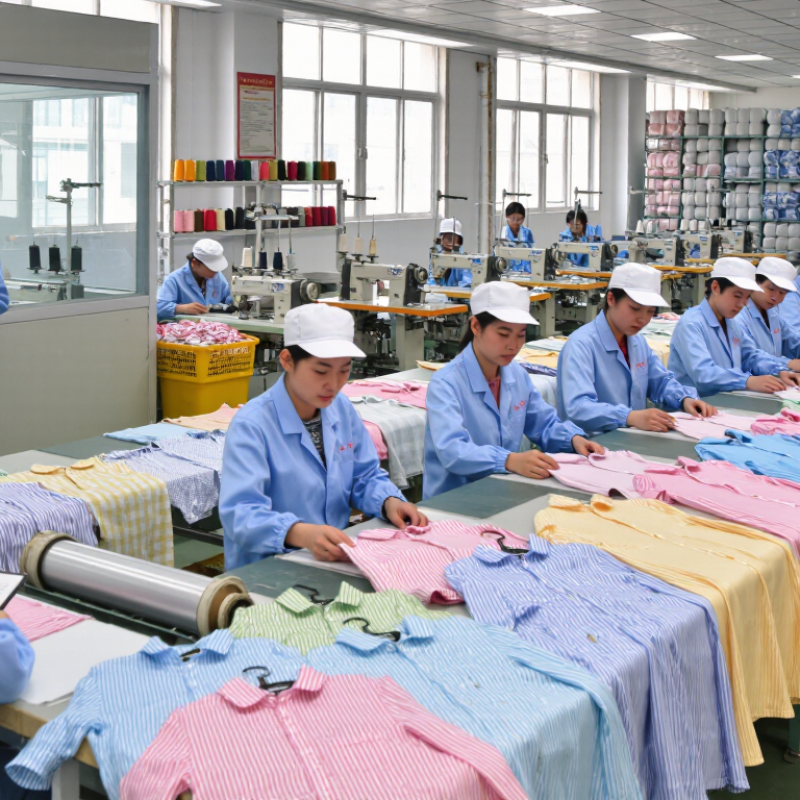
Top Kids Woven Clothing Manufacturers in China

Understanding Kids’ Woven Clothing Manufacturing in China

Understanding kids’ woven clothing manufacturing in China starts with the fabric, not the sewing line. Woven shirts, shorts, and dresses use interlaced yarns, so fabric weight and construction affect comfort, durability, and fit. Textile Exchange’s Materials Market Report 2024 estimates global fiber production reached 124 million tonnes in 2023. That figure is not specific to children’s wear, but it shows the scale of material choices behind sourcing decisions.

A typical order moves through fabric inspection, pattern grading, cutting, sewing, and final checks. For children’s garments, factories should verify seam strength, button attachment, measurements, and wash performance against the buyer’s specifications.

China Customs’ 2023 trade data put textile and apparel exports at about US$293.6 billion; this broad category does not isolate woven children’s clothing.

Small details matter. A pocket that twists after washing can be more revealing than a polished sample. One trade-off is easy to miss: tighter fabric control may reduce defects, yet it can add time and cost.

The process is not always neat. Clear measurement sheets and approval samples help, though they cannot remove every production variation.

Key Criteria for Evaluating Chinese Manufacturers

A useful evaluation starts with the actual garment, not a polished factory profile. Ask for a sample in the intended fabric, then check stitching, button attachment, pocket alignment, and seam finish. Small details matter. For woven children’s clothing, request fabric composition records and test results for shrinkage, colorfastness, and seam strength. Confirm that trims are secure and suitable for the garment’s intended age range. Requirements vary by market, so documentation should match the destination and product.

Review how the manufacturer controls quality during production. Ask who inspects fabric rolls, how defects are recorded, and whether finished garments are measured against an approved size chart. Check production capacity, minimum order quantities, sample timelines, and how delays are communicated. Clear answers are more useful than broad promises. Even a careful sample can flatter a factory; bulk production may behave differently. That gap deserves attention. Request a written inspection plan and agree on tolerances before placing an order. Communication also reveals practical fit: if small questions about labels or packing take days to resolve, larger changes may be harder. No supplier is perfect, and a low price can conceal trade-offs in consistency or service. Keep comparing evidence.

Key Criteria for Evaluating Chinese Kids’ Woven Clothing Manufacturers

Suggested evaluation weights for comparing suppliers. These are buyer-assigned priorities, not measured performance data or industry statistics.

Prioritize product safety and quality, then assess production reliability, order flexibility, communication, and customization against your sourcing needs.

Profiles of Leading Kids’ Woven Clothing Manufacturers

Profiles of leading kids’ woven-clothing manufacturers should show what each factory can actually make. Some specialize in crisp cotton shirts; others handle lined jackets, elastic-waist trousers, or small-batch prints. Ask for fabric weight, shrinkage results, stitching samples, and size-grading records. A sample jacket reveals more than a polished catalogue. Check whether the same team handles pattern development, cutting, sewing, and final inspection. That matters. It can reduce handoff errors, though it does not guarantee smooth production.

China’s textile and apparel exports totaled about US$293.6 billion in 2023, according to trade statistics summarized by the China Chamber of Commerce for Import and Export of Textiles. This broad figure describes the sector, not children’s woven wear alone. It does show the scale of the supplier base.

Compare manufacturers by documented production capacity, fabric sourcing records, inspection procedures, and realistic lead times—not export scale alone. Request recent measurement reports and ask how defects are recorded and corrected. A tidy profile can still conceal bottlenecks. I would treat unusually fast delivery promises with caution, especially when custom fabric is involved. Not always. A clear, specific answer is useful; vague claims deserve follow-up.

Comparing Product Ranges, Production Capabilities, and Certifications

A useful comparison of children’s woven clothing manufacturers starts with the actual product range. Check whether a supplier makes shirts, dresses, shorts, trousers, and lightweight jackets in the fabrics you need. Ask to see samples with different details, such as elastic waistbands, button plackets, and reinforced seams. A broad catalog can look reassuring, though it may hide uneven experience across product types. Details matter.

Production capability is more than a large factory or a stated monthly output. Ask how fabric inspection, pattern development, cutting, sewing, and final checks are handled. Confirm whether the factory can produce a pre-production sample and explain how it manages size consistency across a run. Request realistic lead times and clarify what happens when fabric arrives late. No checklist removes every surprise.

Certifications should be checked for scope, validity, and the facility they cover. A document may relate to a management system or material claim, so confirm that it matches your specific order. Ask for current records and independent test reports where relevant, then verify details with the issuing organization. Keep written specifications for measurements, labeling, and inspection criteria. Small gaps in communication can become costly; that part deserves more attention than buyers sometimes give it.

Choosing a Manufacturer for Your Sourcing Needs

When choosing a children’s woven clothing manufacturer in China, match its strengths to your product and order size. Ask about experience with shirts, dresses, or trousers, not just general garment production. Request a sample in your actual fabric. Check button attachment, seam neatness, print alignment, and comfort against the skin. Small details matter.

Before placing a bulk order, agree on fabric composition, measurements, tolerances, and acceptable shade variation in writing. Wash-test the sample for shrinkage and color transfer, then compare it with the approved reference. Ask how the factory handles size grading and production changes; vague answers deserve follow-up. Clear records help.

Also review the manufacturer’s quality checks, production capacity, lead times, and communication routine. Confirm which product-safety requirements apply in your destination market, and request relevant test records. An independent inspection can catch stitching or packing issues before shipment, though it cannot replace careful sampling. Price matters, but an unusually low quote may exclude finishing, testing, or rework. I would compare several suppliers using the same specification sheet. Some uncertainty remains.

FAQS

What makes woven children’s clothing different from knitwear?

Woven fabric uses interlaced yarns, which affects its weight, feel, and fit. Shirts, shorts, and dresses may need different fabric constructions. A soft sample can still feel stiff after washing.

Which production steps should buyers expect?

Orders typically move through fabric inspection, pattern grading, cutting, sewing, and final checks. Factories should measure garments against an approved size chart. Small details matter.

What should a sample inspection include?

Check seam strength, button attachment, pocket alignment, and stitching. Wash the sample and look for shrinkage or color changes. A neat sample proves little by itself.

Which test records are useful for children’s woven garments?

Request fabric composition records and relevant results for shrinkage, colorfastness, and seam strength. Check that trims are secure and suitable for the intended age range. Requirements vary by market.

How can buyers assess a factory’s production controls?

Ask who checks fabric rolls and how defects are recorded. Confirm that finished pieces are measured against approved specifications. Bulk production may differ from the sample.

What should buyers clarify before placing an order?

Agree in writing on measurements, tolerances, inspection steps, minimum quantities, and sample timelines. Ask how delays are communicated. Clear answers help, but they do not prevent every problem.

How should production capacity and lead times be compared?

Ask how the factory handles cutting, sewing, and size consistency across a run. Request realistic lead times, including what happens if fabric arrives late. No checklist removes every surprise.

How should certifications and other documents be checked?

Check each document’s scope, validity, and covered facility. Confirm that it applies to the specific order, and verify details with the issuing organization. Paperwork can leave gaps.

Conclusion

This overview explains how Kids Woven Clothing Manufacturing works in China, from fabric selection and garment construction to sampling, production planning, and quality checks. It outlines practical criteria for evaluating manufacturers, including experience with children’s apparel, communication, order flexibility, lead times, workmanship, and the ability to meet requested specifications. Rather than relying on company names, it describes the kinds of suppliers buyers may encounter, such as factories specializing in woven basics, seasonal garments, or more customized production.

The article also compares manufacturers by product range, production capacity, quality-control processes, and relevant certifications, helping buyers understand what to verify during sourcing. It concludes with guidance for matching a manufacturer to specific needs, such as order volume, product complexity, budget, and delivery schedule. Careful comparison, clear requirements, and consistent communication can help build a reliable sourcing relationship and support dependable product quality.
Clara

Clara

Clara is a professional marketing specialist with a deep understanding of the company’s products, customers, and industry landscape. With a strong ability to connect technical knowledge with practical business value, she creates clear, informative, and engaging content for the company’s......