



Executive Whitepaper: Strategic Apparel Sourcing & Sustainable Manufacturing Excellence
The global apparel manufacturing ecosystem is undergoing an unprecedented paradigm shift driven by ESG (Environmental, Social, and Governance) compliance, strict international labor standards, and consumer demand for absolute supply chain transparency. As a leading apparel manufacturer established in Dhaka, Bangladesh since 1984, Posh Garments Ltd. operates at the intersection of artisanal woven garment craftsmanship, digital production management (ERP/IE), and eco-friendly material innovations. This comprehensive whitepaper explores technical OEM/ODM workflows, procurement trends for 2026-2030, material matrices, and risk-mitigation frameworks for international fashion brands and corporate buyers.
1. Macro Procurement Shifts: The Rise of Sustainable OEM/ODM Manufacturing
Modern retail brand procurement managers no longer evaluate textile exporters solely on FOB (Free on Board) unit price. Search intent analysis across European and North American wholesale apparel buyers reveals a dramatic shift toward keywords such as "GRS certified woven clothing factory," "low carbon textile manufacturer," and "compliant OEM blouse supplier." Buyers are actively mitigating supply chain vulnerabilities caused by greenwashing regulations, regulatory penalties like the EU Digital Product Passport (DPP), and ethical audit failures.
To deliver genuine Information Gain, our manufacturing framework prioritizes circular textiles, closed-loop waste recycling, and traceable material origin certificates. By integrating sustainable fibers—including Organic Cotton (GOTS), Recycled Polyester (GRS), 100% Pure Linen, and FSC-certified Chiffon/Viscose—with high-precision production lines, we enable brands to build resilient product lines that meet stringent global eco-standards while maintaining healthy gross margins.
Traceable Fiber Sourcing
Full chain-of-custody verification for GOTS organic cotton, GRS recycled synthetic yarns, and sustainably harvested European flax linen.
Social & Ethical Compliance
Comprehensive third-party audit verifications certified under BSCI, SEDEX (SMETA), and SLCP platforms, upholding fair labor and safety standards.
Advanced Technical Execution
Mastery in complex woven embellishments including pin tucking, faggoting, smocking, computerized shearing, and digital rotary printing.
2. Sustainable Material Matrix & Technical Fabric Performance
Achieving superior garment drape, breathability, and structural durability requires matching specific garment silhouettes with precise fabric GSM (grams per square meter) and yarn weave configurations. Below is our engineering benchmark matrix for custom OEM/ODM production:
| Fabric Category | Composition & Certification | Typical GSM Range | Key Apparel Applications | Sustainability & Eco Index |
|---|---|---|---|---|
| 100% Linen Woven | Pure European Flax Linen | 120 - 185 GSM | Cropped Drop-Shoulder Blouses, Summer Button-Downs | 100% Biodegradable, Zero Synthetics |
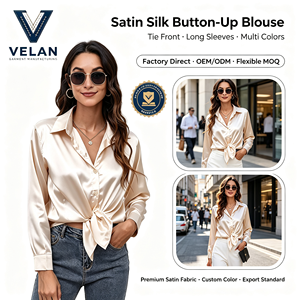
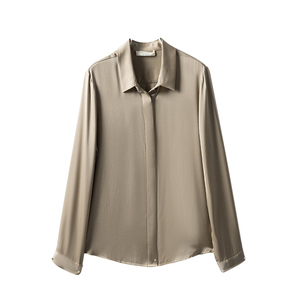
| Eco-Silk & Viscose Blend | FSC Certified Wood Pulp / Silk Blend | 80 - 115 GSM | French Style Dressy Blouses, Elegant Office Shirts | Low-Water Closed Loop Processing |
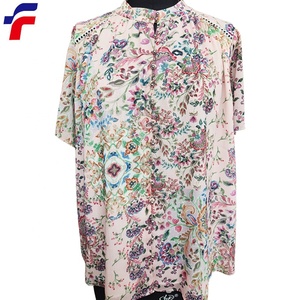
| Recycled Chiffon | 100% GRS Recycled Polyester (rPET) | 65 - 90 GSM | Floral Print Sheer Blouses, Tiered Layer Tops | 75% Lower CO2 Footprint vs. Virgin Polyester |
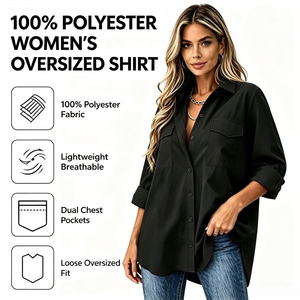
| Organic Cotton Poplin | 100% GOTS Certified Organic Cotton | 110 - 150 GSM | Plaid Checkered Tops, Casual Oversized Shirts | Pesticide-Free, Non-GMO Seed Origin |
| Asymmetric Stretch Woven | Organic Cotton + 5% Recycled Elastane | 160 - 210 GSM | One-Shoulder Ruched Waist Tops, Slim Fit Blouses | High Recovery, Reduced Microfiber Shedding |
Our in-house chemical testing laboratory ensures that all dyed and printed textiles comply with OEKO-TEX Standard 100 protocols, guaranteeing zero hazardous heavy metals, AZO dyes, or formaldehydes in finished goods exported to EU, US, and Asian ports.
3. Strategic Apparel Procurement Trends (2026–2030 Horizon)
Navigating international apparel procurement requires anticipating structural shifts in manufacturing hubs, trade agreements, and technology integration. Global fashion brands are actively restructuring their vendor portfolios based on four strategic pillars:
1. Digital Prototyping & 3D Sample Optimization
Physical sample revisions generate significant fabric waste and extend lead times. By utilizing CAD pattern engineering and 3D digital garment fitting simulations, sample approval cycles are reduced from 30 days down to 5 days, minimizing carbon cost per product line.
2. Nearshoring vs. High-Capability Asian Hubs
While nearshoring offers geographical proximity, comprehensive textile ecosystem depth, duty preferences (GSP/EBA frameworks), and cost-efficient skilled labor make Bangladesh the premier hub for complex woven garments like women's blouses, tailored shirts, and uniforms.
3. Zero-Landfill Pre-Consumer Waste Circularity
Leading buyers demand zero-waste manufacturing facilities. Production scraps (Juta cotton cutting waste) are segregated at the cutting table and redirected into mechanical recycling mills to produce upcycled yarns for future garment batches.
4. Automated Quality Management Systems (QMS)
Inline inspection checkpoints utilizing AQL 1.5/2.5 standards ensure defective stitching, tension irregularities, or shade variances are identified in real-time, delivering 99.4% first-time-pass quality rates for bulk export shipments.
4. Enterprise Manufacturing Infrastructure & Strategic Advantage
Posh Garments Ltd., headquartered in Tejgaon Industrial Area, Dhaka, Bangladesh, represents over four decades of continuous industrial growth. Founded in 1984 as a small-scale workshop with 60 sewing units, the company has expanded into a state-of-the-art enterprise employing over 1,200 dedicated professionals across 12 modern production lines.
Why Global Brands Partner with Posh Garments Ltd.:
- Empowerment-Driven Workforce: Over 80% of our workforce consists of skilled female garment artisans, driving socio-economic upliftment in local communities under ethical wage and healthcare programs.
- Diverse Brand Portfolio Credibility: Manufacturing strategic partner to world-class retailers including GUESS, C&A, LC Waikiki, US Polo Assn, GÉMO, Adler, Jeans Fritz, Christian Berg, La Halle, and Falabella.
- Technological Craftsmanship: Specialized machinery for specialized seam finishes—faggoting, smocking, pin-tucking, elastic shearing, heat-transfer vinyl pressing, and intricate embroidery.
- Dual B2B Platform Integration: Fully verified supplier profile on international sourcing networks including Foursource and transparency databases such as Mapped in Bangladesh (MIB).
- Full OEM/ODM Versatility: Seamless execution of complete customer-provided Tech Packs (OEM) or full-service concept development (ODM) including style research, pattern drafting, fabric sourcing, and size grading.